
April 10, 202611 min read
Angel vs. Seed Funding: What Every Indian Founder Must Know Before Raising Capital
By Abhishek Bhanushali
Startup Funding

Disclaimer: This content is for educational purposes only and should not be considered as financial advice. Every business situation is unique, and we recommend consulting with qualified financial advisors before making important business decisions.
If you've started preparing for an IPO, you already know where traditional advisory breaks. The spreadsheet models. The valuation debates stretch across board meetings. The uneasy feeling that your company's worth depends on whose assumptions you accept.
This article addresses the funding valuation adjustment, a concept from derivatives trading, because founders seeking valuation clarity often encounter it. But here's what matters: the valuation challenges you face as an Indian enterprise preparing for public markets have almost nothing to do with FVA as practised in investment banking derivatives desks.
For AI-native execution firms like S45, the question isn't about derivatives theory; it's about whether your valuation architecture can survive SEBI scrutiny and investor due diligence.
A funding valuation adjustment is a technical pricing mechanism used by global investment banks to value over-the-counter (OTC) derivative instruments. It accounts for the funding costs of positions in uncollateralized derivative trades.
When a bank enters a derivative contract, it must fund the position. The funding cost above the risk-free rate becomes the funding valuation adjustment. This became critical after 2008 when bank funding spreads increased significantly.
The FVA framework is part of the XVA family:
These adjustments adjust derivative fair values to reflect real-world frictions, including credit risk, funding spreads, collateral costs, and capital charges.
The derivatives pricing framework behind funding valuation adjustment operates in a different universe from IPO readiness:
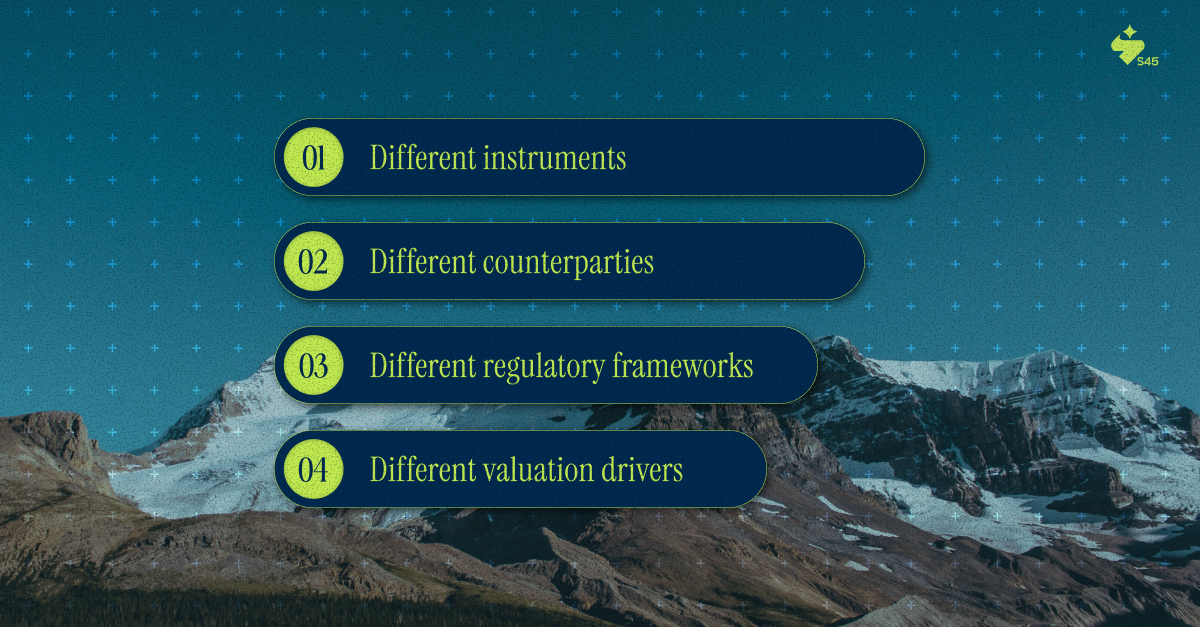
While the funding valuation adjustment has minimal direct relevance, the broader principle—that funding costs and capital structure affect valuation, applies to pre-IPO enterprises. Here's where valuation discipline becomes critical:
SEBI requires detailed disclosure of all funding rounds in the three years preceding your IPO. This isn't a formality. Institutional investors scrutinize the valuation methodology used in each round, whether fair value aligns with investor pricing, whether there is any preferential treatment or ratchets, and the independence of the valuers.
A mismatch between pre-IPO round valuations and IPO pricing creates red flags. If your Series B investor paid ₹500 per share 18 months ago and you're now pricing the IPO at ₹350, you must explain the decline with evidence, market conditions, operational underperformance, or changes in comparable company multiples.
Indian Accounting Standards mandate fair value accounting for various financial instruments. For enterprises preparing to list:
Ind AS 109 requires fair value measurement of certain financial assets and liabilities. If your pre-IPO funding included convertible notes with complex conversion mechanisms, you must separately value and disclose these components.
Ind AS 113 establishes the fair value hierarchy:
Most pre-IPO valuations fall into Level 3. This means your DRHP must disclose the valuation methodology, key assumptions, sensitivity analysis, and any changes in approach across funding rounds. This level of transparency is forensic, evidence-based, and what separates successful IPOs from ones that stall in SEBI query loops.
Your pre-IPO capital structure, debt-to-equity ratio, preferential shareholding, promoter stake, and ESOP pool directly impact the listing valuation. Unlike derivatives, where funding valuation adjustment quantifies funding costs, in IPO,s the question is strategic:
Can you optimise debt levels to improve return on equity without breaching listing requirements? Should you clean up complex preferential rights before filing the DRHP to avoid valuation debates? How do outstanding convertible instruments affect dilution and post-listing equity value? Does your promoter's pledge of shares create overhang that institutional investors will discount?
These aren't theoretical pricing adjustments. They're structural decisions that determine whether your IPO succeeds or stalls.
Modern IPO execution requires valuation discipline grounded in systematic diagnostics, not episodic advisory. This means:

The distinction: traditional banks approach valuation episodically, and analysis happens at discrete milestones. AI-native execution treats valuation as a continuous discipline threaded through readiness, drafting, and book-building.
The derivatives pricing world that created funding valuation adjustment is built on mathematical sophistication: stochastic calculus, Monte Carlo simulations, and credit spread modelling. That sophistication is necessary when valuing exotic options or interest rate swaps.
It's unnecessary, and often counterproductive, when preparing an Indian enterprise for public markets. What SEBI demands, what institutional investors respect, and what protects your listing valuation is not complexity. It's clarity.
Clarity means:
This clarity doesn't emerge from generic valuation advisory. It emerges from systematic, evidence-linked execution. AI systems handle scale by scanning thousands of pages of prior funding documents, cross-referencing regulatory filings, and tracking comparable company data. Experienced sector bankers exercise judgment, know which SEBI queries are likely to arise, understand how anchor investors interpret valuation gaps, and recognize when promoter expectations need recalibration.
Most investment banks approach IPO valuation the way they've always done: build a DCF model, run a comparable-company analysis, average the results, and present three scenarios to the board.
This approach breaks because:
Execution models that pair sector bankers with proprietary AI invert this. Valuation discipline becomes continuous. AI handles evidence-linking at scale. Bankers own end-to-end outcomes, which means they cannot present valuation work that fails under scrutiny.
There is one narrow area where funding valuation adjustment principles become relevant for Indian enterprises: if your pre-IPO capital structure includes structured instruments with embedded funding costs.
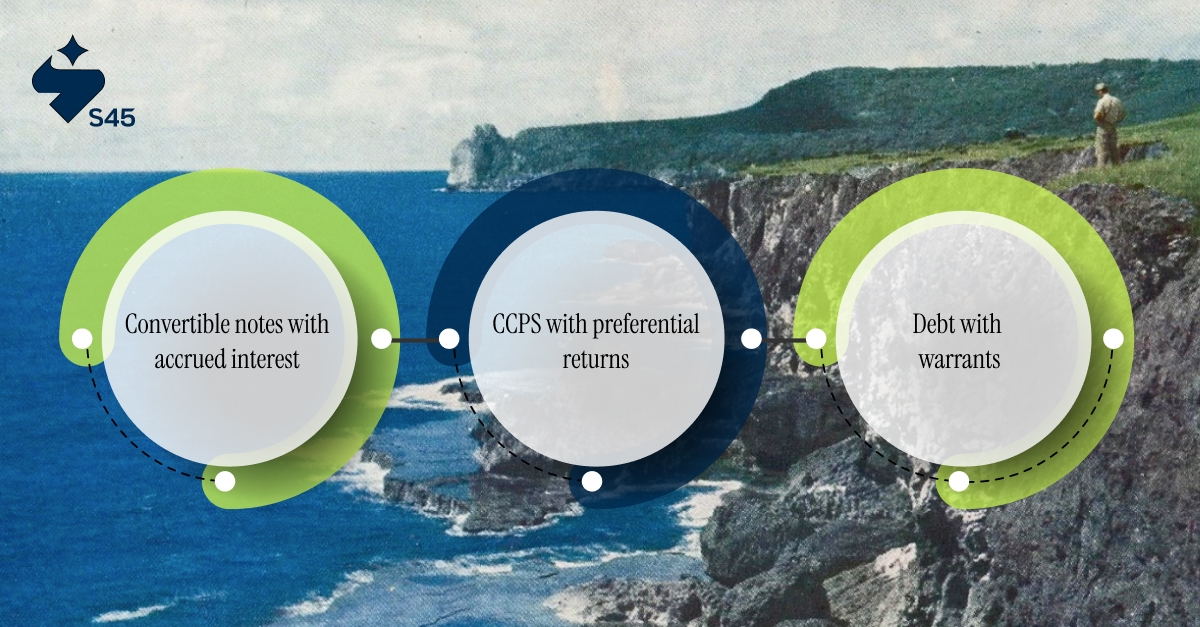
In these cases, the approach remains the same: evidence-linked disclosure that shows how each instrument was valued, the assumptions that drove the valuation, and how SEBI's requirements for transparent disclosure of complex instruments are met.
Most founders treat capital structure as a given. You raised Series A at certain terms. Series B brought in growth capital with standard preferences. By the time IPO conversations begin, capital structure feels immutable.
It's not. And this is where execution models that own outcomes create disproportionate value:
If your existing shareholder agreements include ratchets, liquidation preferences, or participating preferred structures, they create complexity in valuation disclosures. Early diagnostics identify these and facilitate negotiations to simplify terms before DRHP drafting, when amendments are cheap and straightforward.
SEBI has minimum promoter contribution requirements. If your promoter stake is marginal or your capital structure makes calculation ambiguous, listing becomes uncertain. Sophisticated execution models different scenarios, promoter buyback of institutional stakes, ESOP pool adjustments, and debt-to-equity conversions to ensure you meet requirements without eroding promoter control unnecessarily.
If your enterprise carries high-cost debt or debt with restrictive covenants, post-listing operations may be constrained. Coordinating pre-IPO debt refinancing, using IPO proceeds, bridge financing, or restructuring with existing lenders ensures your listed entity starts with a clean balance sheet.
These aren't valuation exercises. They're execution decisions that affect valuation. Traditional banks rarely address them proactively because they operate as advisors, not execution partners. Firms that own outcomes must identify and resolve capital structure issues before they become obstacles to an IPO.
Funding valuation adjustment matters in derivatives trading, but for Indian enterprises preparing for public markets, the lesson is simpler and stricter. Valuation discipline is not about theory; it’s about evidence-linking, regulatory transparency, and disclosures that withstand SEBI scrutiny. Pre-IPO funding structures must be presented with forensic precision, clear methodologies, and auditable assumptions.
IPO success depends on a valuation architecture that institutional investors trust, and regulators don’t endlessly. That readiness doesn't come from episodic advice or academic models. It comes from execution systems that compress months of valuation disclosure work into weeks, eliminate manual errors through automation, and maintain evidence integrity at scale.
When experienced sector bankers pair with AI-driven execution platforms, judgment becomes institutional. They know which assumptions will trigger SEBI queries, when comparables hold versus when precedent transactions matter, and when promoter expectations need recalibration. Outcome ownership means valuation work that survives DRHP filing, listing, and post-listing scrutiny.
Build a valuation architecture that survives SEBI scrutiny and institutional due diligence. S45 delivers IPO execution clarity through banker judgment powered by AI, not theory.
Discover more insights on similar topics