
April 10, 202611 min read
Angel vs. Seed Funding: What Every Indian Founder Must Know Before Raising Capital
By Abhishek Bhanushali
Startup Funding

Disclaimer: This content is for educational purposes only and should not be considered as financial advice. Every business situation is unique, and we recommend consulting with qualified financial advisors before making important business decisions.
Series F funding is where the pressure changes character. Investors stop asking about growth rates and start asking about audit trail depth, board composition, and whether your finance function can survive SEBI's ICDR scrutiny.
Your cap table, clean at Series D, now has cascading compliance implications that no one has mapped.
This is the private market's final checkpoint before a categorically different standard applies. Most Indian enterprises do not fail in the public markets because their business is weak. They fail because the gap between private capital readiness and IPO-grade institutional readiness was never closed.
This blog further explains why Series F is a critical inflection point before public markets. It highlights how expectations shift from growth to governance, and what it takes to bridge that gap.
Series F funding sits at the extreme late end of the private capital continuum. By the time a company reaches this stage, it has already navigated seed capital, Series A through E, and multiple rounds of valuation resets, dilution, and recalibration of investor expectations.
The standard private capital progression looks like this:
Series F funding is raised by companies with demonstrably large revenue bases, strong customer retention, and institutional-grade operations. The capital is typically deployed toward final expansion moves, balance sheet strengthening, or liquidity engineering ahead of a public listing.
At this stage, institutional investors, whether sovereign wealth funds, large PE firms, or crossover funds that participate in both private and public markets, are not taking a leap of faith. They are buying a position in a company they expect to be publicly listed within a defined window.
That means their due diligence mirrors public market scrutiny in almost every respect:
For an Indian enterprise, this list is not abstract. It is the same checklist your SEBI-registered merchant banker will present when your company enters the IPO readiness assessment.
This is where many Indian founders and CFOs encounter a structural problem that is entirely avoidable.
Firms like S45, which operate as AI-native investment banks in the Indian capital markets, have a clear view of this gap. The companies that arrive at IPO readiness discussions in the best shape are those that treated their Series F round as an institutional dress rehearsal, not just a capital event.
The companies that arrive underprepared share a pattern: they raised Series F on the strength of growth metrics and investor relationships, without simultaneously upgrading the internal compliance, reporting, and disclosure architecture to match the demands of a DRHP filing.
Three structural factors explain why Indian enterprises consistently underestimate the distance between Series F readiness and IPO readiness:
1. Private investor tolerance vs. public market zero-tolerance
Private investors, even at Series F, work within relationships. They know the founder. They understand the context behind a restated revenue figure or a deferred audit opinion. Public market regulators and institutional investors do not operate this way. SEBI's ICDR framework is not context-sensitive. The DRHP is a public document. Every disclosure is permanent.
2. The advisor fragmentation problem
Most Indian enterprises at Series F are working with a combination of transaction advisors, legal counsel, statutory auditors, and financial advisors who have never operated as a coordinated unit. Each is optimizing for their own deliverable. No one owns the outcome. The result is a fragmented readiness process that delays DRHP filing, increases cost, and creates regulatory exposure.
3. Governance theater vs. governance infrastructure
A board restructured ahead of Series F to satisfy investor requirements is not the same as a board built to satisfy SEBI's Listing Obligations and Disclosure Requirements. The former is cosmetic. The latter requires documented processes, independent director onboarding, audit committee activation, and traceable decision trails.
Understanding what sophisticated late-stage investors expect at this stage gives Indian promoters and CFOs a practical benchmark for readiness.
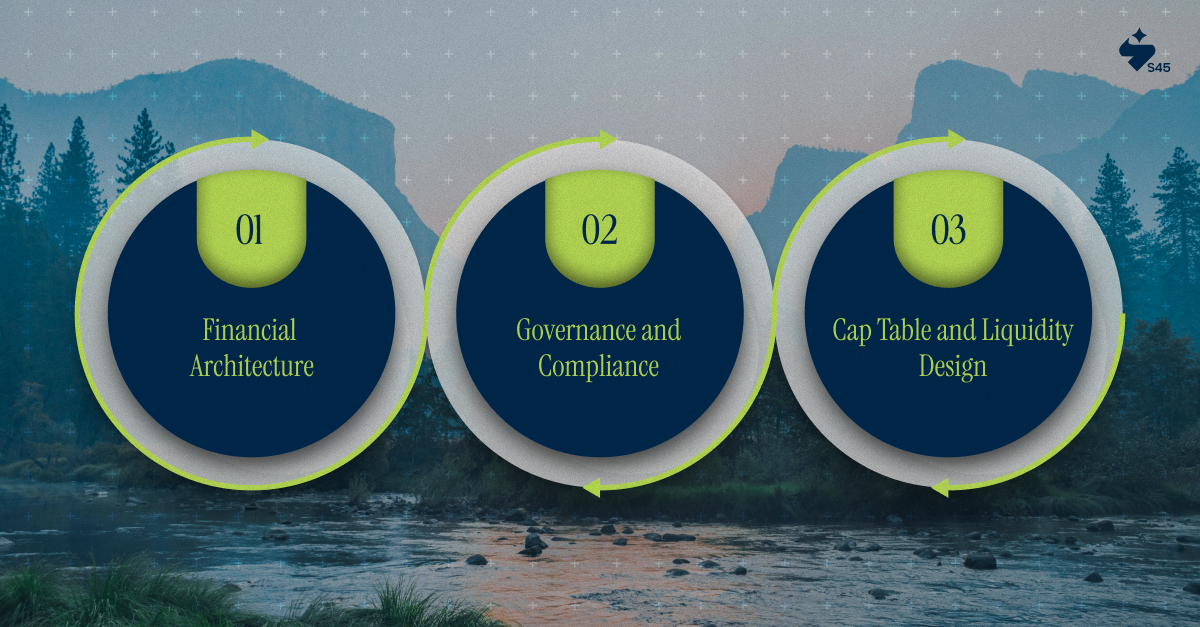
The Indian IPO process, from initial mandate to listing, should take between six and twelve months for a well-prepared enterprise. In practice, it takes significantly longer for most companies. The delays are not caused by market conditions or regulatory backlog. They are caused by workflow failures that compound.
Here is where the time goes:
S45's AI-driven DRHP drafting infrastructure addresses this directly. By pairing proprietary workflow systems with sector-experienced bankers, the platform compresses the mandate-to-DRHP timeline significantly.
The process drops from the industry average of four to six months to just thirty to forty-five days, without sacrificing compliance quality. This is not a technology claim. It is an operational architecture built around the reality that most IPO delays are documentation failures, not market failures.
One of the most consequential shifts an Indian enterprise needs to make between its Series F and IPO postures is from assertion-based reporting to evidence-linked disclosure.
In private rounds, a founder can say: "Our revenue has grown at X% for three years." Investors accept it, verify it loosely, and proceed.
SEBI does not accept assertions. The DRHP requires every material claim to be supported by audited data, third-party validation where applicable, and consistent definitions. "Revenue growth" must be defined, calculated, and traceable to the precise line items in the audited financial statements.
This discipline, applied at the Series F stage, is what separates enterprises that file clean DRHPs from those that spend months responding to SEBI observations asking for substantiation of claims that should have been evidence-anchored from the outset.
Indian enterprises that treat SEBI's ICDR and LODR frameworks as compliance checklists rather than as structural architecture consistently pay a premium for that attitude. The premium comes in three forms: extended timelines, SEBI observation rounds that require substantive responses, and post-listing disclosure failures that damage institutional investor confidence.
The SEBI ICDR Regulations govern everything from eligibility criteria for the Main Board and SME Exchange to the specific disclosure requirements in each section of the DRHP. These are not bureaucratic requirements. They are the structural framework that gives institutional investors the confidence to participate in Indian primary markets.
An enterprise that builds its governance, disclosure, and financial reporting architecture around ICDR requirements before filing does not experience compliance as a friction point. It experiences it as the infrastructure that supports a credible market story.
Founders who delay governance upgrades, related-party cleanup, and audit trail construction until after IPO mandate pay in three currencies: time, money, and credibility. The legal and advisory costs of emergency compliance remediation are materially higher than the cost of building this infrastructure proactively. More importantly, the reputational signal of visible compliance gaps in a DRHP is permanent.
The application of AI to IPO preparation is not a futuristic proposition. It is an operational reality for firms that have built the right infrastructure. But the framing matters.
AI compresses timelines by eliminating the manual, repetitive, error-prone work that accounts for most IPO preparation delays:
What AI cannot do is replace the judgment of an experienced sector banker who understands pricing dynamics, investor appetite, and the specific risk profile of a business in a particular industry vertical. The combination of AI infrastructure and banker judgment is what produces the compression in outcomes. Neither alone is sufficient.
Whether your company is post-Series F or approaching that stage, the following structural elements need to be in place before IPO mandate to avoid the timeline failures that are endemic to Indian primary market transactions:
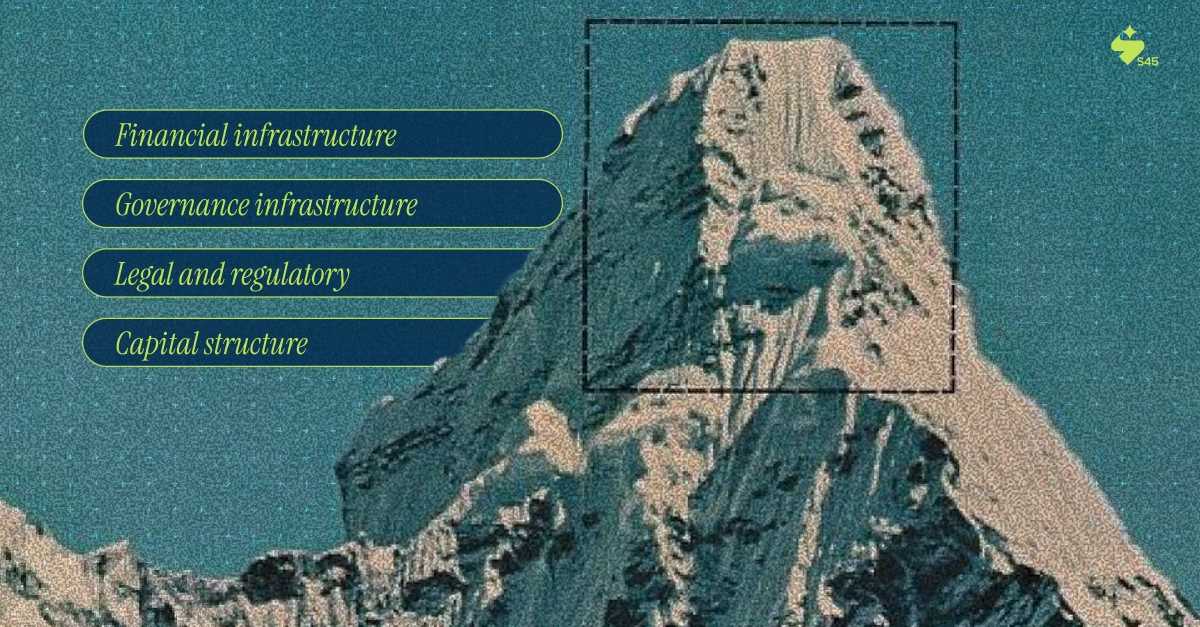
Series F funding is a signal, not a destination. It signals that a company has built something of institutional scale. What it does not automatically signal is that the company is ready to operate under the permanent, public, zero-tolerance scrutiny of India's capital markets.
The enterprises that use their Series F stage to build IPO-grade governance, evidence-linked financial reporting, and compliance infrastructure arrive at their public market debut with credibility intact and timelines compressed. The enterprises that defer this work arrive at the DRHP stage with a year of remediation ahead of them.
If your enterprise is at or approaching Series F, and public markets are on the horizon, the clarity you need is operational, not motivational. It begins with an honest assessment of where your governance, financial, and compliance architecture actually stands relative to what institutional public market investors and SEBI will demand.
Connect with S45 to assess your enterprise's IPO readiness before committing months of management bandwidth to a process that breaks where you least expect it.
Discover more insights on similar topics