
March 23, 202610 min read
How Professionals Moving from Consulting to Private Equity Institutionalize Mid-Market Firms
By Aman Singh
Growth & Development

Disclaimer: This content is for educational purposes only and should not be considered as financial advice. Every business situation is unique, and we recommend consulting with qualified financial advisors before making crucial business decisions.
The CFO gets another email from the merchant banker. Three more DRHP documents. Old board resolutions. Restated financials. Contract approvals. Marked “urgent,” four months behind schedule.
This is IPO prep in India. Not because SEBI is difficult or markets are hostile, but because the process was built for an era of manual aggregation and evidence gaps.
For companies with revenue of ₹80–800+ Cr, asking whether startup accelerators help at this stage misses the point. Accelerators optimise for early funding, pitch narratives, and founder mentoring. They don’t prepare companies for SEBI ICDR compliance.
An accelerator can help a ₹10 Cr startup raise capital. It cannot compress DRHP timelines, withstand SEBI observation cycles, or structure post-listing liquidity.
At the IPO stage, enterprises don’t need mentorship. They need institutional precision and regulatory execution. The gap isn’t one of quality; it’s a category gap. Using the wrong tool only guarantees delays and board-level frustration.
Understanding why accelerators fail IPO-bound enterprises requires clarity on what these programmes actually deliver, and what structural gaps they leave unaddressed in the capital markets journey.
When founders ask whether startup accelerators are worth it, they're usually evaluating programmes like Y Combinator, Techstars, or regional equivalents. These programmes follow a proven model: accept cohorts of 10 to 50 startups, provide seed capital (typically $20,000 to $500,000), offer 3 to 6 months of mentorship, and culminate in a demo day where founders pitch to investors.
The economics are clear. Accelerators take 5-10% equity in exchange for capital and guidance. Their success depends on portfolio companies raising subsequent rounds or achieving exits. The model works brilliantly for companies at the right stage.
But the stage is everything.
Accelerators excel at helping founders achieve product-market fit, refine go-to-market strategies, and secure Series A funding. They connect first-time entrepreneurs with advisors who have navigated similar paths. They create peer pressure that accelerates execution. For companies raising $1 to 5 million, these outcomes justify the equity dilution.
For enterprises preparing for public markets, the value proposition collapses entirely.
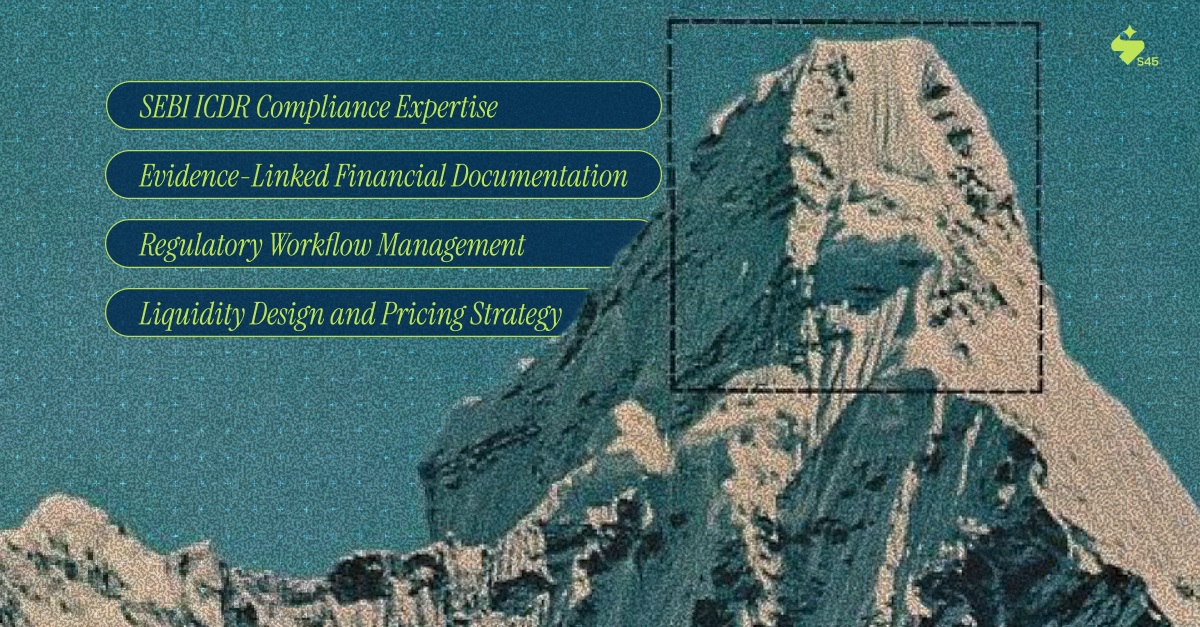
Consider what accelerators don't provide and cannot build expertise in:
The gap isn't about quality. Accelerators do what they're designed to do exceptionally well. The gap is structural. IPO preparation is regulatory craftsmanship, not startup coaching. AI-native investment banks like S45 have emerged to address this chaos gap, pairing proprietary AI systems with seasoned sector bankers to compress DRHP timelines from 4 to 6 months to 30 to 45 days, treating SEBI compliance as craftsmanship rather than friction.
The numbers tell a story of unprecedented opportunity. Yet behind every successful listing lies a battlefield of operational failures that most enterprises only discover after committing to the process.
India witnessed 80 mainboard IPOs in FY25, raising ₹1,630 billion, significantly higher than the ₹619 billion raised in FY24. By calendar year 2025, over 365 IPOs mobilised ₹1.95 lakh crore, marking India as the busiest IPO market globally by deal count.
Despite this momentum, most Indian enterprises preparing for IPOs still face significant operational delays. Not because markets are unfavourable. Not because SEBI is unreasonable. But because workflows are broken.
The typical journey looks like this:
Promoters hire a merchant banker, who requests three years of audited financial statements. CFO provides Excel files. Banker requests restated statements. CFO engages auditors. Auditors request board resolutions proving share issuances. The company secretary searches physical files. Meanwhile, legal counsel begins drafting risk disclosures based on incomplete financial data. Management discussion sections reference projections that accounting teams haven't verified. Material contracts get listed without evidence of board approval dates.
Six months pass. The DRHP reaches internal review. Merchant banker flags 47 inconsistencies. Another revision cycle begins.
This isn't an exaggeration; it is the median experience for mid-market Indian companies undertaking Main Board or SME IPOs.
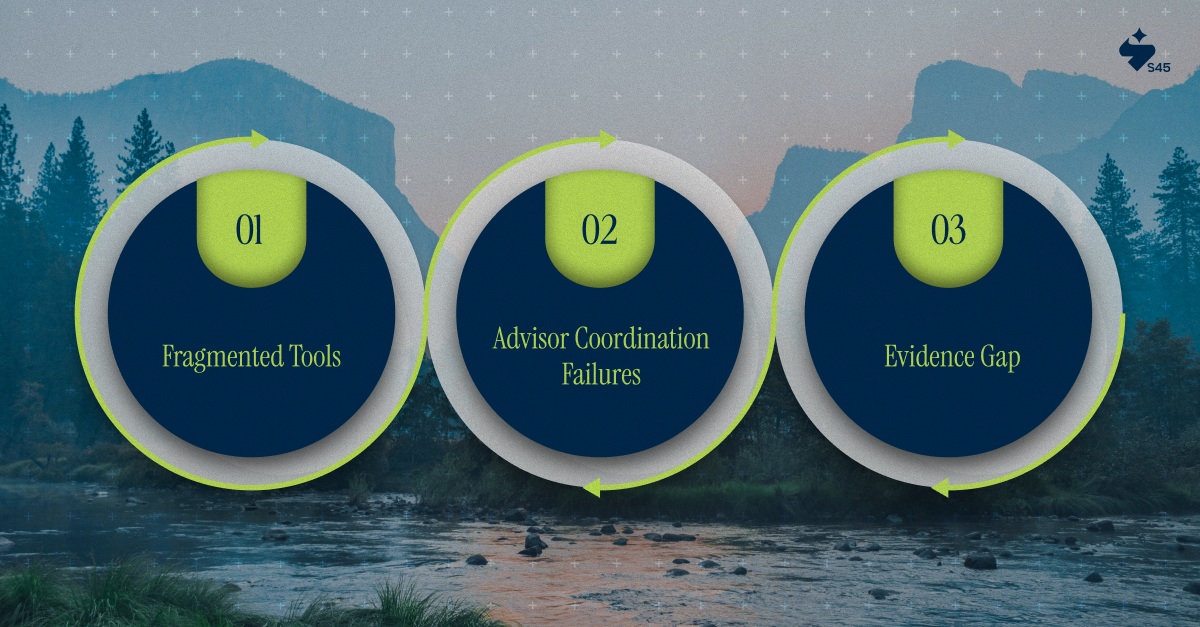
The chaos stems from problems that exist regardless of team competence or advisor quality:
These aren't strategic failures. They're operational defects. And operational defects can't be solved through mentorship, networking events, or pitch coaching, the core offerings of accelerator programmes.
Capital markets operate on a fundamentally different currency than private fundraising rounds. Understanding this distinction separates enterprises that list successfully from those trapped in revision cycles.
One principle governs every successful IPO: evidence beats opinion.
SEBI ICDR regulations mandate specific disclosures across financial statements, risk factors, management credentials, related-party transactions, and utilisation of proceeds. These aren't marketing claims; they're auditable assertions that must link to source documents.
When a DRHP states "Company achieved 45% revenue CAGR over the past three years," that claim must trace back to audited financial statements certified by statutory auditors. When it discloses "Promoter holds 67% equity," that figure must reconcile with shareholder agreements, board resolutions approving share issuances, and Registrar of Companies filings.
This evidentiary standard is what separates capital markets documentation from growth-stage fundraising decks. Investors in private rounds rely on founder credibility and forward-looking projections. SEBI relies on proof.
Modern execution platforms address this requirement through AI-driven evidence linking. Every disclosure in the DRHP is supported by underlying documentation: financial statements, board minutes, contracts, and regulatory certificates. If the evidence doesn't exist, the disclosure doesn't appear. This eliminates the most common source of SEBI observation letters: unsubstantiated claims that trigger revision cycles.
For enterprises considering whether startup accelerators are worth it, this distinction is fundamental. Accelerators help founders tell compelling stories. Capital markets demand provable facts.
The enterprises that navigate IPO preparation fastest share a counterintuitive insight: they treat regulatory requirements as a structural advantage, not a bureaucratic burden.
Indian promoters often experience regulatory compliance as friction, a checklist of requirements that slow down execution and add legal fees. This mindset guarantees delays.
The enterprises that list fastest treat SEBI ICDR (Issue of Capital and Disclosure Requirements) and LODR (Listing Obligations and Disclosure Requirements) as structures, not constraints. They recognise that every mandatory disclosure exists to protect institutional investors from information asymmetry. They build compliance into their operational DNA rather than bolting it on during IPO preparation.
Consider the timeline difference. SEBI typically reviews DRHPs within 30 days if the documentation is complete. But "complete" doesn't mean "submitted", it means every required disclosure is present, audited financials are restated correctly, risk factors are comprehensive, and evidence trails are intact.
For companies that start IPO preparation with fragmented records, achieving "complete" documentation can take 8 months to 1 year. For companies that treat compliance as craftsmanship from the beginning, it takes weeks.
Institutional readiness diagnostics evaluate compliance positioning before formal engagement, identifying gaps in:
If these gaps exist, addressing them during pre-mandate preparation, not during DRHP drafting when timeline pressure is acute, becomes critical.
This is what "compliance as craftsmanship" means: anticipating regulatory requirements before they trigger delays.
Beyond operational complexity, IPO preparation triggers psychological responses that accelerator programmes never address because they operate in entirely different emotional territory.
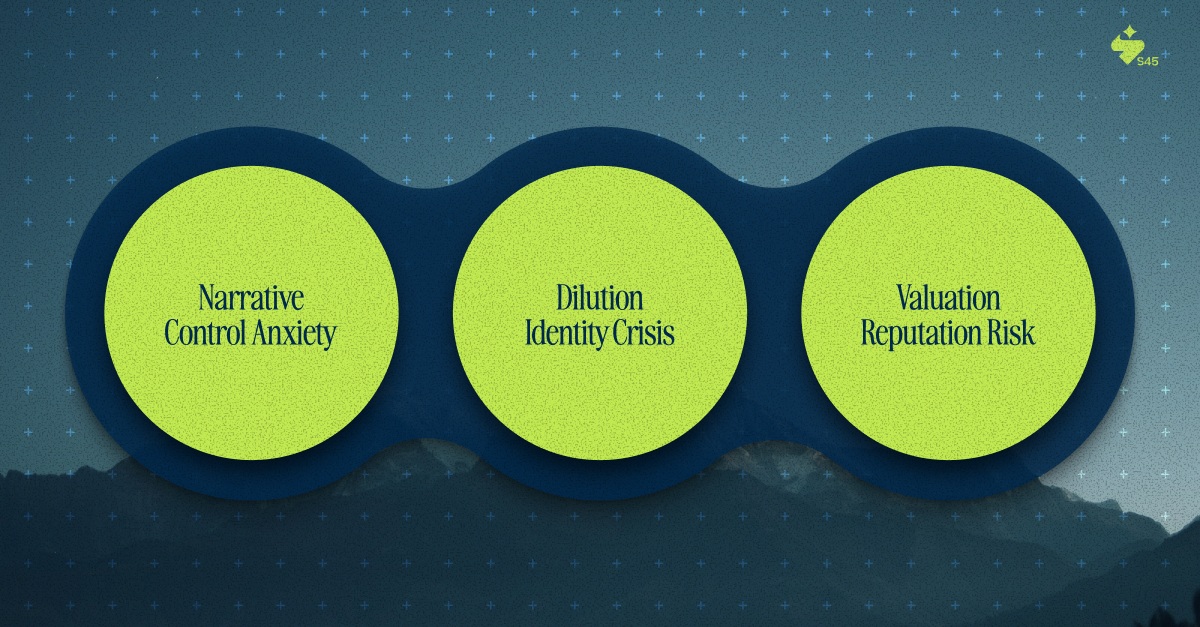
The decision to pursue an IPO creates fears that are rarely discussed but universally experienced:
These fears are real. But they're manageable through institutional discipline, not reassurance.
The resolution requires acknowledging the emotional cost, then addressing it through structure. Narrative control concerns get resolved through disclosure frameworks that maintain strategic positioning while meeting regulatory requirements. Dilution anxiety gets managed through capital structure modelling that optimises liquidity without excessive promoter sales. Valuation uncertainty gets anchored in comparable company analysis and institutional demand signals, not subjective optimism.
Empathy without discipline is therapy. Discipline without empathy is arrogance. Great IPO execution requires both.
After examining the structural gaps, regulatory requirements, and operational demands of Indian capital markets, the answer becomes self-evident.
Are startup accelerators worth it? For pre-revenue startups building MVPs and seeking seed funding, absolutely. Programmes like Y Combinator and Techstars provide network access, fundraising expertise, and peer accountability that significantly compress timelines. First-time founders benefit enormously from structured guidance during the earliest, most uncertain phases.
But for Indian enterprises generating ₹80-800+ Cr in revenue and targeting public markets, the answer is unequivocal: no.
Accelerators don't solve IPO workflow failures. They don't compress DRHP timelines. They don't own regulatory outcomes. They don't pair AI-driven documentation with institutional banking judgment. They don't design liquidity structures for post-listing trading depth.
They weren't built to.
The enterprises that list successfully in India's booming capital markets, 365+ IPOs raising ₹1.95 lakh crore in 2025, share a common trait: they treated IPO preparation as institutional execution, not growth coaching. They recognised that operational precision matters more than motivational guidance. They partnered with firms that own outcomes, not advisors who offer opinions.
The question "Are startup accelerators worth it?" reflects a stage-specific calculation. For early-stage companies, accelerators provide immense value. For IPO-bound enterprises, they're categorically the wrong tool.
Indian capital markets are experiencing historic growth. NSE topped global exchanges in funds raised during FY25; domestic retail investors demonstrated robust confidence with ₹87 billion in net DII inflows in CY25; and IPO pipelines remain strong heading into 2026.
But a capital market opportunity doesn't translate to IPO execution capability. The chaos gap remains brutal: fragmented workflows, manual documentation, evidence deficits, and regulatory revision cycles that waste months and threaten listings.
This gap demands a different kind of partner. Not a growth advisor. Not a startup accelerator. An execution partner that pairs regulatory AI infrastructure with seasoned banker judgment to own outcomes end-to-end.
If your enterprise generates ₹80 to 800+ Cr in revenue and you're evaluating Main Board or SME Exchange listing options, institutional clarity precedes everything else. S45 assesses capital markets readiness in weeks, identifying compliance gaps and structural vulnerabilities before they lead to delays.
Discover more insights on similar topics