April 10, 202611 min read
Angel vs. Seed Funding: What Every Indian Founder Must Know Before Raising Capital
By Abhishek Bhanushali
Startup Funding

Have you seen the wave of ESOP buybacks sweeping India’s startup scene lately?
Employee ownership is no longer just a promise; many firms are now offering real liquidity to their teams. In 2024, more than 3,000 startup employees cashed out through ESOP buybacks worth over Rs. 1,450 crore.
This trend shows how companies are balancing ownership, motivation, and financial strategy all at once. ESOP buybacks give employees access to real value before IPOs, while preserving founder control.
In this guide, you will learn what an ESOP buyback is, why companies do it, how the process works, the different types, along with the benefits and risks. You’ll also see how founders can plan buybacks smartly and sustainably.
An ESOP buyback happens when a company repurchases employee stock options it had earlier granted. Instead of waiting for an IPO or sale, employees can convert part of their ownership into cash through these buybacks.
It differs from granting ESOPs, where employees receive stock options as a promise of future value. A buyback closes the loop, turning those paper options into real money. It makes ESOPs meaningful beyond motivation, giving employees tangible financial rewards.
In India, some of the biggest startup buybacks highlight this trend. Flipkart announced a ₹600 crore ESOP buyback during its Walmart acquisition. Zerodha completed multiple buyback rounds, distributing over ₹200 crore to employees from 2020. These examples show how buybacks create trust and loyalty by rewarding employees early.
ESOP buybacks are more than financial events; they strengthen culture and align long-term interests. However, they also raise an important question: why do companies choose to offer them in the first place?
ESOP buybacks are not just financial transactions; they reflect how companies value their teams. For startups, where cash incentives may be limited, buybacks provide a valid way to reward and retain employees while strengthening belief in the company’s growth.
Here are the key reasons companies choose to offer them:
ESOP buybacks combine financial rewards with cultural benefits, creating a cycle of trust. To understand their practical impact, it helps to see how the buyback process actually works.
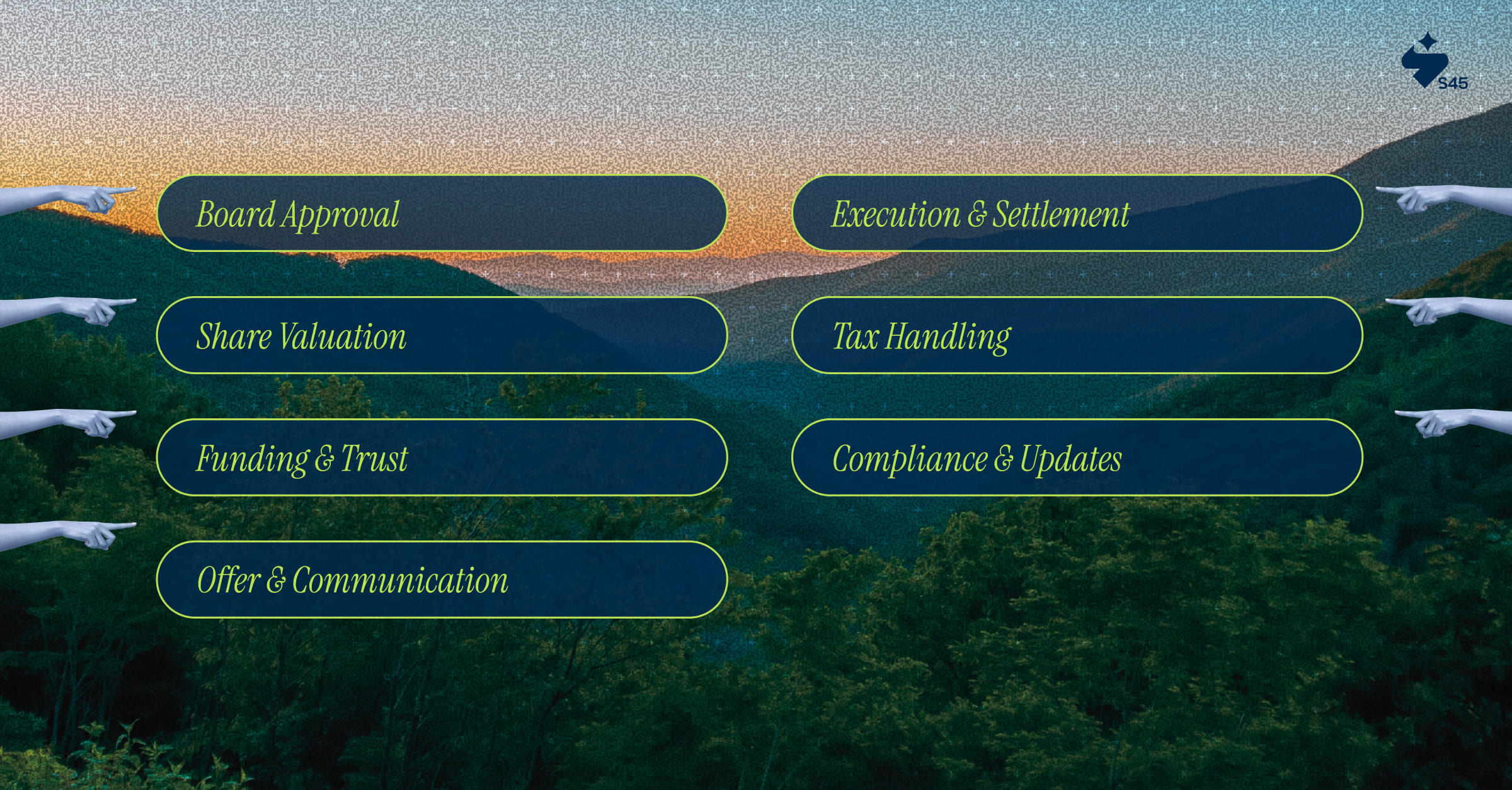
A well-run ESOP buyback follows a clear process. Each step reduces legal and financial surprises. Founders, HR, and finance must coordinate closely. Here are the practical steps you will follow to execute a buyback cleanly and fairly.
The board must approve a buyback plan and policy. The policy sets eligibility, timing, and funding sources. It defines who may sell, how many shares, and acceptance rules. Clear policy prevents disputes and aligns expectations across teams. Ensure the board records the resolution and keeps minutes for future audits and investor checks.
You need a fair market valuation before making offers. Use a registered valuer or merchant banker for an independent price. The valuation method must be documented and defensible to employees and auditors. A clear price reduces disputes and supports tax compliance. Preserve valuation reports for regulatory or investor reviews.
Choose how the company will fund the buyback. Options include using surplus cash, borrowing, or using an ESOP trust. Each option affects cash flow and governance. Using a trust can smooth future re-grants. Borrowing increases financial cost. Document the funding source and assess its impact on operating capital and financial ratios.
Prepare a written offer with price, eligibility, and timelines. Specify vesting status and minimum sale amounts. Communicate the tax implications clearly and provide individual statements. Allow adequate acceptance time and offer Q&A sessions. Transparent, timely communication reduces confusion and builds trust among employees.
Once employees accept, process payments and share transfers. Execute share transfer documents and bank payments promptly. Decide whether shares will be cancelled or held by a trust for reallocation. Complete any required stamp duty or transfer formalities. Reconcile bank receipts and maintain audit trails for each transaction.
Buybacks trigger tax and withholding obligations for both parties. The company must calculate any required deductions and issue certificates. Employees need guidance on how the cash will affect their taxable income. Retain tax advice and show calculations. Correct filings reduce audit risk and ensure smooth post-transaction reporting.
After settlement, update the statutory registers and the cap table. File any required returns with regulatory bodies and inform investors if needed. Adjust ESOP pools and future grant plans based on the post-buyback equity structure. Maintain a clear audit trail and inform stakeholders about the completed round.
An ESOP buyback involves careful planning across approvals, valuation, compliance, and payouts. Many founders struggle to balance employee expectations with cash flow realities during this process. That’s where having structured guidance becomes important. Platforms like S45 help align buyback design with long-term financial stability, not just short-term liquidity.
The next step is to review the common buyback models and pick the one that fits your stage and strategy.
ESOP buybacks are not one-size-fits-all. Companies choose models based on business stage, employee size, liquidity needs, and regulatory comfort. Understanding each type helps founders plan effectively, ensuring fairness, compliance, and alignment with company strategy.
Below are the main buyback approaches commonly used in India and global startups.
In this model, the company purchases vested ESOP shares directly from employees. Payments are usually in cash, and shares may be cancelled or reallocated for future grants. This approach provides immediate liquidity to employees while maintaining the ESOP pool’s continuity. It is straightforward, widely used, and fully controlled by the company.
Employees sell their shares to new or existing investors during a funding round. This approach offers market-driven pricing and can provide higher liquidity. The company typically approves the transaction to maintain cap table oversight. Secondary sales align employee interests with investor confidence and offer an external exit option.
An ESOP trust repurchases shares from employees, often during exits or planned liquidity events. This method helps manage ownership transitions smoothly and ensures the ESOP pool remains intact for future grants. Trust buybacks are especially useful in mature companies or when the ESOP is administered via a dedicated trust structure.
When employees leave, companies or trusts may repurchase vested shares to simplify the cap table and free equity for reallocation. This targeted approach ensures smooth ownership transitions, avoids fragmented shareholding, and maintains control. It is particularly relevant in startups with high employee turnover or growing teams.
Companies may initiate buybacks tied to milestones such as new funding, achieving profitability, or pre-IPO events. It allows broad-based employee liquidity aligned with significant corporate events. It is a strategy, ensuring that employees benefit from the company’s success while maintaining orderly cap table management and regulatory compliance.
Each buyback type serves different objectives, from liquidity to ownership management. Choosing the right model ensures employees gain value while the company maintains control and ESOP continuity. Now, let’s discuss the benefits these buybacks bring to employees and companies.
ESOP buybacks create value for employees and companies. Employees gain liquidity and financial rewards, while companies retain talent, manage ownership efficiently, and maintain ESOP continuity. Understanding the benefits helps founders plan buybacks that balance employee satisfaction with strategic business goals.
Below is a side-by-side comparison of key advantages.
Parameter | Benefits for Employees | Benefits for Companies |
Liquidity | Provides immediate cash for qualified ESOPs, allowing wealth realization | Frees up equity for reallocation to new or existing employees |
Reward and Recognition | Recognizes contribution and motivates employees | Improves employee loyalty and reduces attrition |
Portfolio Management | Helps employees diversify personal financial portfolio | Maintains structured and predictable ownership |
Alignment of Interests | Employees feel their growth is tied to company success | Ensures employees’ long-term incentives align with business goals |
Flexibility | Offers exit options before IPO or sale | Supports strategic planning for future capital raises or restructuring |
ESOP buybacks deliver measurable benefits for both sides, combining liquidity, motivation, and ownership control. Next, you will learn about the risks and considerations involved in executing ESOP buybacks effectively.
While ESOP buybacks can be useful for rewarding employees and aligning incentives, they also come with several challenges. Ignoring these risks can strain finances, trigger legal issues, or even demotivate staff.
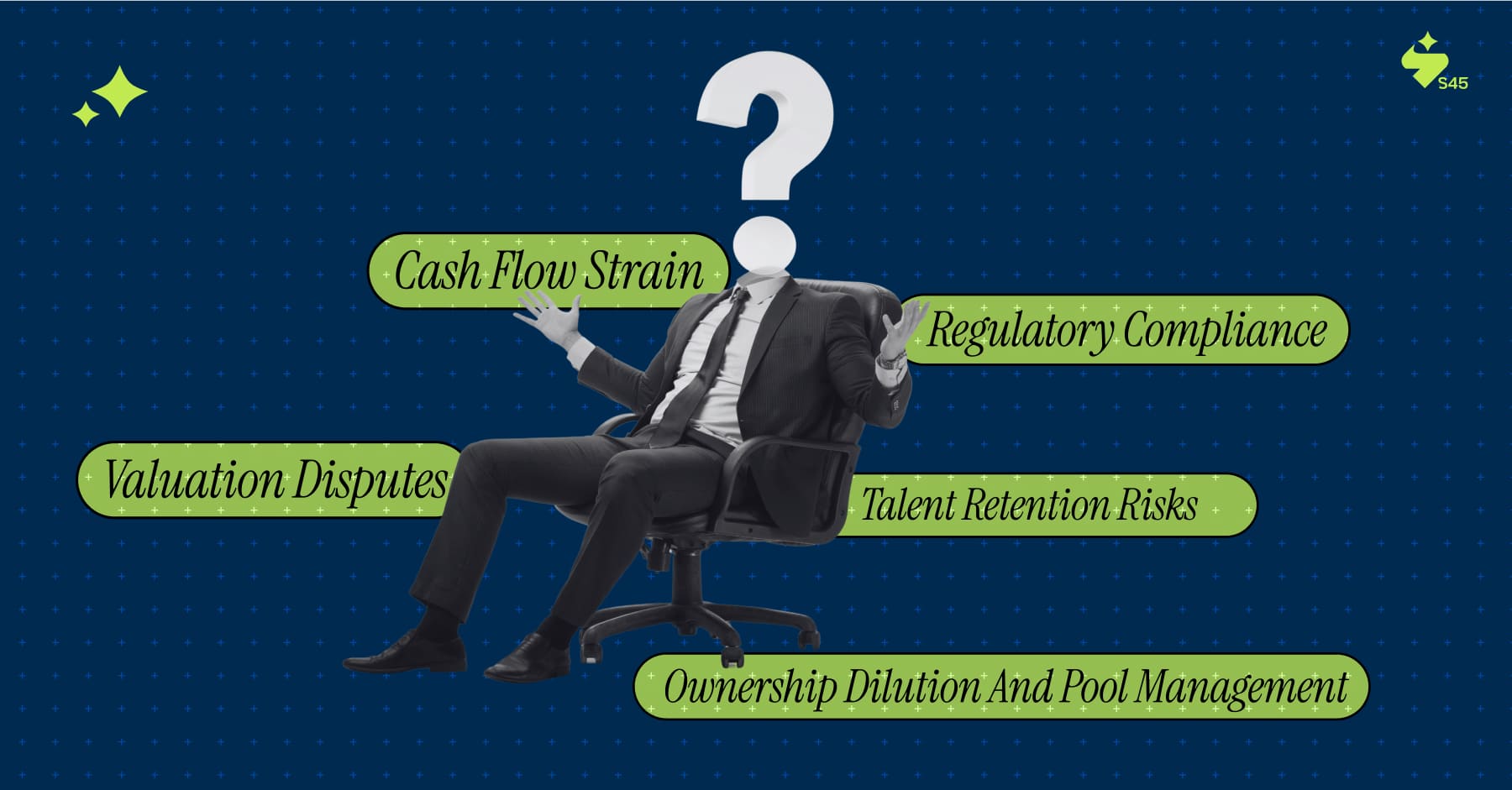
Here are 5 key risks and approaches to manage them:
By understanding these risks from the ground up and applying thoughtful solutions, founders can run ESOP buybacks that are financially sound, legally compliant, and motivating for employees. Next, let’s discuss how professionals like S45 can help founders plan and execute ESOP buybacks effectively.
S45 is a growth-focused platform built for high-performing SMEs, especially those with over ₹100 Cr in revenue or ₹10 Cr in annual profit. It supports founders in designing smarter capital structures that create liquidity without hurting future scaling opportunities.
The platform helps companies structure ESOP buyback policies suited to their stage, whether mid-growth or near expansion. Our S45 Club, for ambitious founders, can exchange insights, access expert resources, and prepare for large-scale growth opportunities.
Additionally, S45 assists in striking the right balance between employee liquidity and growth capital, preventing buybacks from draining resources meant for expansion.
More importantly, S45 brings a strategic lens to buybacks. Instead of treating them as one-off morale boosters, it integrates them into the company’s long-term growth plan. This positions ESOP buybacks as part of a broader, sustainable approach to scaling.
Join S45 today to structure ESOP buybacks that reward employees and fuel sustainable growth, while ensuring ESOP buybacks meet regulatory norms and reflect fair market value.
An ESOP buyback allows employees to convert their paper wealth into real earnings, while giving companies a way to reward, retain, and motivate their teams. The process, from board approval and valuation to execution and compliance, requires clear policies and careful planning.
Companies can choose different buyback routes, from direct buybacks and secondary sales to event-based options, each carrying unique benefits and responsibilities.
The upside is clear: liquidity for employees, stronger loyalty, and a more attractive employer brand. But challenges like cash flow strain, valuation disputes, or uneven employee participation make it essential to align buybacks with long-term goals, not just short-term sentiment.
Done transparently and sustainably, ESOP buybacks can strengthen company culture and enhance the growth story.
Are you ready to structure ESOP buybacks that reward your people and protect your future? Partner with S45 today for clarity and confidence.
Discover more insights on similar topics