
April 1, 202610 min read
Third-Party Funding in Indian Arbitration: What You Need to Know
By Abhishek Bhanushali
Finance Advice

As your business grows, the money conversations change. You move from simple funding discussions to questions about valuation, dilution, deal structure, and long-term control.
At that point, every founder benefits from understanding how investment banking works.
You do not need to master models or spreadsheets. You just need literacy to make better decisions. To know what a fair deal looks like. To understand how M&A really works. To speak the same language as investors, bankers, and advisors when the stakes get higher.
These books help you build that literacy. They explain how deals are structured, how value is created, and how good companies protect themselves when capital gets serious.
If you are preparing for bigger raises, exploring acquisitions, or simply want to sharpen your financial judgment, these are the books that give you a real edge.
Let’s take a look
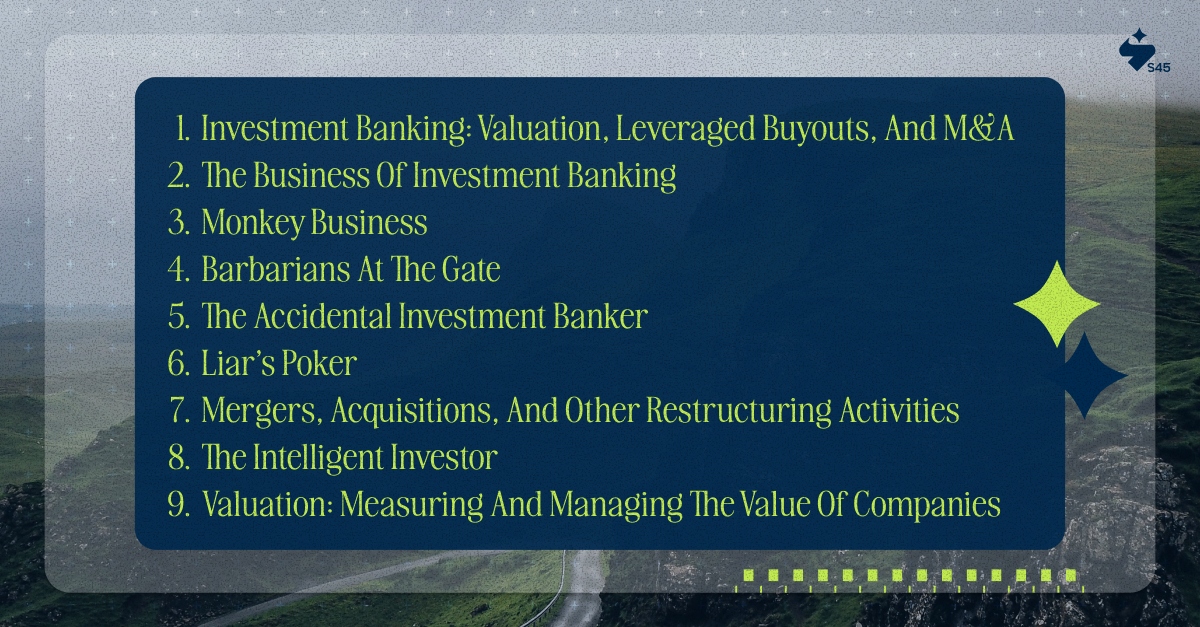
Investment banking can seem distant until you reach a stage where valuations, deals, or capital strategy start affecting your decisions. These books make those ideas simpler to grasp and easier to apply.
Below, you’ll see what each title brings to your journey.
Author: Joshua Rosenbaum & Joshua Pearl
What it’s about: A clear, structured breakdown of valuation, LBOs, and M&A fundamentals. This is the handbook most analysts start with.
Key insights:
Why it matters:
This book helps you understand how investors price your company, what they look for in deals, and how to negotiate from a position of knowledge.
Author: K. Thomas Liaw
What it’s about: A straightforward explanation of how global investment banks operate, earn revenue, and serve clients.
Key insights:
Why it matters:
It gives you clarity on who does what and how deals move through the system, so you know which players to approach when your company is raising or restructuring.
Understanding how investment banks operate gives founders a clearer view of the capital ecosystem. But knowing the system and working within it are two different things.
That is where the right guidance matters.
s45club works with founders who want to approach larger capital decisions with structure, discipline, and long-term clarity, not pressure.
Author: John Rolfe & Peter Troob
What it’s about: A sharp, candid memoir of life as young bankers. Less technical, more cultural insight.
Key insights:
Why it matters:
It helps you read the people across the table. When you understand the incentives and pressures bankers operate under, your conversations become more strategic.
Author: Bryan Burrough & John Helyar
What it’s about: A gripping story of the RJR Nabisco leveraged buyout, one of the biggest deals in history.
Key insights:
Why it matters:
It teaches you how power, influence, and strategy collide in big deals. The same dynamics show up in acquisitions at any scale.
Author: Jonathan A. Knee
What it’s about: A reflective look at the banking world from someone who has seen both sides of the table.
Key insights:
Why it matters:
A good primer for understanding why bankers act the way they do and how to build productive, aligned relationships with them.
Author: Michael Lewis
What it’s about: A classic story about Wall Street trading culture in the eighties.
Key insights:
Why it matters:
It sharpens your instincts for reading markets, investors, and risk-taking personalities. Useful when evaluating term sheets or negotiating large raises.
Author: Donald DePamphilis
What it’s about: A technical but clear guide to the full lifecycle of M&A and restructuring.
Key insights:
Why it matters:
If acquisition or consolidation is part of your growth plan, this gives you the literacy to move through those conversations confidently.
Author: Benjamin Graham
What it’s about: A foundational investing philosophy book focused on judgment, discipline, and long-term thinking.
Key insights:
Why it matters:
Good founders become good capital allocators. This book gives you a mental model for making measured, long-term financial decisions.
Author: McKinsey & Company
What it’s about: The definitive reference on valuation frameworks used by banks, investors, and corporate finance teams.
Key insights:
Why it matters:
When you understand valuation deeply, you negotiate better, plan better, and avoid deals that look attractive but weaken your long-term position.
If you want to go a little deeper into capital strategy and long-term financial thinking, these additional titles are worth your time.
Suggested read: How to Find Investors for Your Startup Business
The more you grow, the more your decisions will shape the company’s future. These books give you detailed frameworks for thinking about governance, discipline, and value creation.
Here’s what to pick up next.
Author: Warren Buffett, edited by Lawrence A. Cunningham
Why it’s useful:
This collection distils Buffett’s thoughts on ownership, capital discipline, governance, and business quality. It teaches founders how great companies think about value over decades, not quarters.
What it gives:
Author: Michel Fleuriet
Why it’s useful:
A lighter, simpler companion to the more technical banking texts. It breaks down how the industry works, how deals are structured, and how banks support companies at various stages.
What it gives:
Author: William N. Thorndike
Why it’s useful:
Not an investment banking book directly, but it is one of the best books ever written on capital allocation, governance, and long-term value creation. It profiles eight CEOs who outperformed the market by making smart, disciplined financial decisions.
What it gives:
Now that you’ve seen the full list, here’s how these books actually support you in day-to-day and long-term decisions.

As your business expands, the financial decisions you make carry long-term consequences for ownership, stability, and strategy. These books prepare you for those conversations.
Here’s how they support your growth:
When you know how investors think about risk, growth, and comparables, you can tell whether a valuation supports your journey or quietly dilutes your control. You negotiate with more clarity and raise capital without weakening your cap table.
Acquisitions move quickly and can overwhelm even seasoned founders. A basic grasp of deal structures, diligence, and integration helps you spot whether a deal creates real value or brings hidden risk. You enter discussions with a steady hand, not uncertainty.
As funding grows, so does scrutiny. Clean reporting, board discipline, and strong financial systems show investors that the company can scale responsibly. Good governance becomes a growth signal, not just a compliance task.
Debt, equity, structured funding, private placements, public routes. Knowing the fundamentals helps you choose what matches your ambition and protects the business. You plan ahead instead of reacting under pressure.
These books don’t just teach finance. They help you become the kind of founder who makes strong, long-term decisions without getting overwhelmed by the complexity around them.
Suggested read: Growth of Capital Market in India: Trends and Overview
Reading these books gives you the literacy to understand how deals are structured, how value is created, and how capital really works. But the bigger challenge is putting that knowledge to use while running and scaling a business at the same time.
That is where the right partners matter.
s45club works with founders who are preparing for their next phase of growth. We combine the experience of founders, investors, and advisors to help you make better financial decisions, raise capital with confidence, and build the governance discipline that long-term success requires.
Our focus is simple: Protect your vision. Strengthen your control. Help you build the legacy you are working for.
If you want a partner who walks with you as you scale, the S45 community is built exactly for that. Join the s45club today to start shaping your next chapter!
Discover more insights on similar topics