
April 9, 202611 min read
What Is a PPM in Private Equity? Guide to Capital Raises Done Right
By Abhishek Bhanushali
Venture Capital

You’ve spent decades building a manufacturing business with 200 employees. Your supply chain is solid, customer relationships are strong, and you’ve weathered countless challenges. Now, you’re ready to exit, or circumstances force your hand.
Then, reality hits: potential buyers lowball your valuation. Your financials aren’t audit-ready. Your competitor offers 40% less than what you believe your business is worth. You settle because you have no other choice.
This scenario is common across India’s MSME sector, costing founders millions and eroding decades of hard work. The gap between startup exits and MSME exits is wide. While tech founders prepare for IPOs or VC-backed acquisitions, MSME founders face unique challenges: limited buyers, asset-heavy valuations, family succession issues, and emotional hurdles.
This gap is what we’re addressing today.
An exit strategy is a founder's roadmap for transitioning ownership or leadership, maximizing value, and preserving legacy. For MSMEs, it includes three key areas often overlooked in startup-focused strategies:
1. Value Realization Beyond Valuation
Your business’s value isn’t just its EBITDA or assets. It includes:
Traditional strategies focus only on financials. MSME exits must also account for these intangible assets.
2. Continuity Planning for Stakeholder Ecosystems: Unlike startups, MSME teams span generations. Your employees' jobs, supplier partnerships, and customer relationships depend on post-exit stability. Your exit must protect these, not just maximize payout.
3. Timeline Flexibility Based on Business Maturity: Startups typically exit in 5-7 years to meet investor goals. MSMEs, however, operate on founder readiness and market conditions, with exit timelines ranging from 6 months to 15 years.
Organizations like S45 help MSME founders build exit-ready businesses without sacrificing growth. The goal is to be ready when the right exit opportunity arises, capturing full value.
The real question is: why does this matter so urgently, even if you're years away from stepping aside?
Many Indian small business owners regret inadequate exit planning, resulting in value erosion compared to well-planned exits. But the real cost is personal. The founders who work another decade after failed exit attempts, or those forced to sell undervalued businesses due to health emergencies.
Here’s why exit planning is essential for MSME founders:
Without exit planning, your investment’s return is uncertain. You build equity, but liquidity remains out of reach. Forced exits, due to health issues or economic downturns, leave you negotiating from a position of weakness.
Strategic exit planning creates multiple options, builds relationships with potential buyers, and positions your business for premium valuations.
Most MSME founders are the business, customer relationships, operational knowledge, and decisions all rely on them. This creates operational risk for buyers.
Exit planning helps build institutional value that survives your departure, documenting processes, developing leadership, and creating independent systems. Ironically, businesses built for sale often become more valuable to keep.
Many founders feel they must choose between selling for financial gain or preserving their legacy. Sophisticated exit strategies avoid this. You can structure deals that provide liquidity and ensure continuity—through earnouts, partial exits, or choosing acquirers who align with your values.
Now, let’s look at the practical exit pathways available to you—moving beyond the IPO ideal.
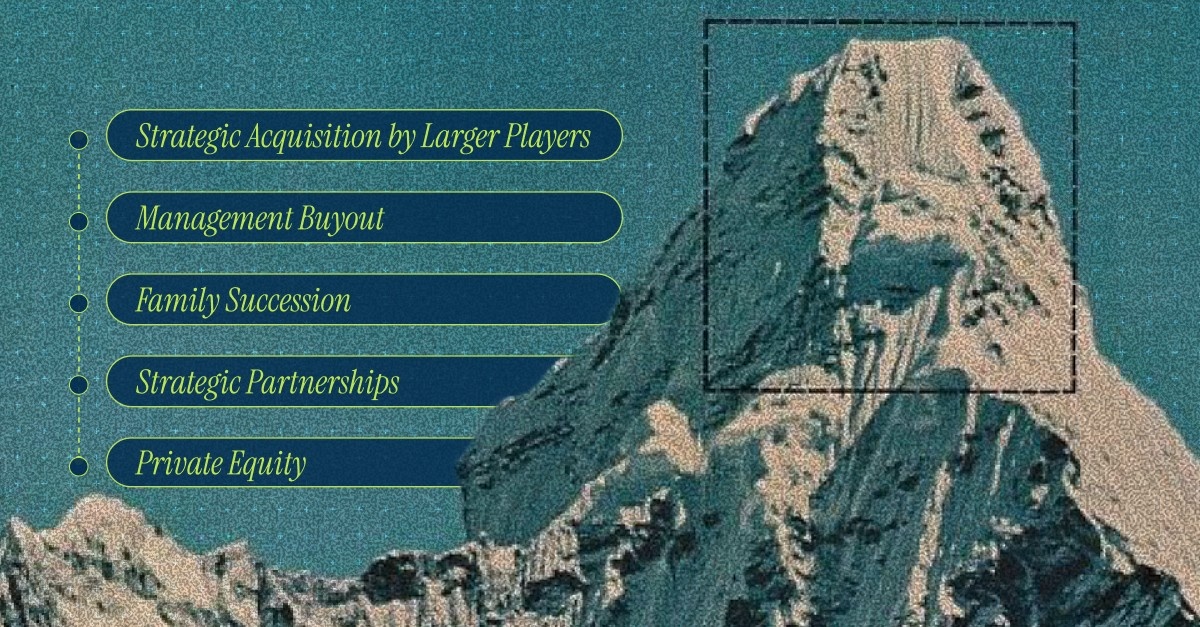
Here are exit pathways beyond the standard IPO/M&A framework, tailored for MSMEs:
What it means: A larger company acquires your business for strategic value, such as market expansion or talent acquisition.
Why it works for MSMEs: Strategic buyers pay premiums for assets like strong customer relationships or regulatory compliance.
Preparation:
What it means: Your management team buys the business using a mix of personal investment, debt, and seller financing.
Why MSMEs favor it: MBOs maintain company culture and ensure continuity. The team already knows the business.
Financing: Creative methods like seller earnouts or SBA loans are common for MSMEs.
Critical consideration: Ensure your management team has the capital and entrepreneurial mindset to lead effectively.
What it means: Ownership passes to the next generation through planned succession.
Indian context: Family succession is common but often poorly planned, leading to conflicts and inefficiencies.
Structured approach:
What it means: Sell a minority stake (20-40%) while maintaining control, or form joint ventures.
Why it matters for MSMEs: Partial exits provide liquidity while keeping you involved in the business.
Example: A Kerala spice export business sells 35% to an international food company, gaining access to better distribution while maintaining family control.
What it means: Institutional investors acquire majority or significant minority stakes, often with a 5-7 year exit horizon.
Challenge: Larger PE firms target ₹50 crore+ deals, but family offices are increasingly interested in high-performing MSMEs.
Why MSMEs attract PE:
Each strategy offers different benefits, depending on your goals and business stage. However, choosing among these paths is meaningless if your business isn't ready for transition.
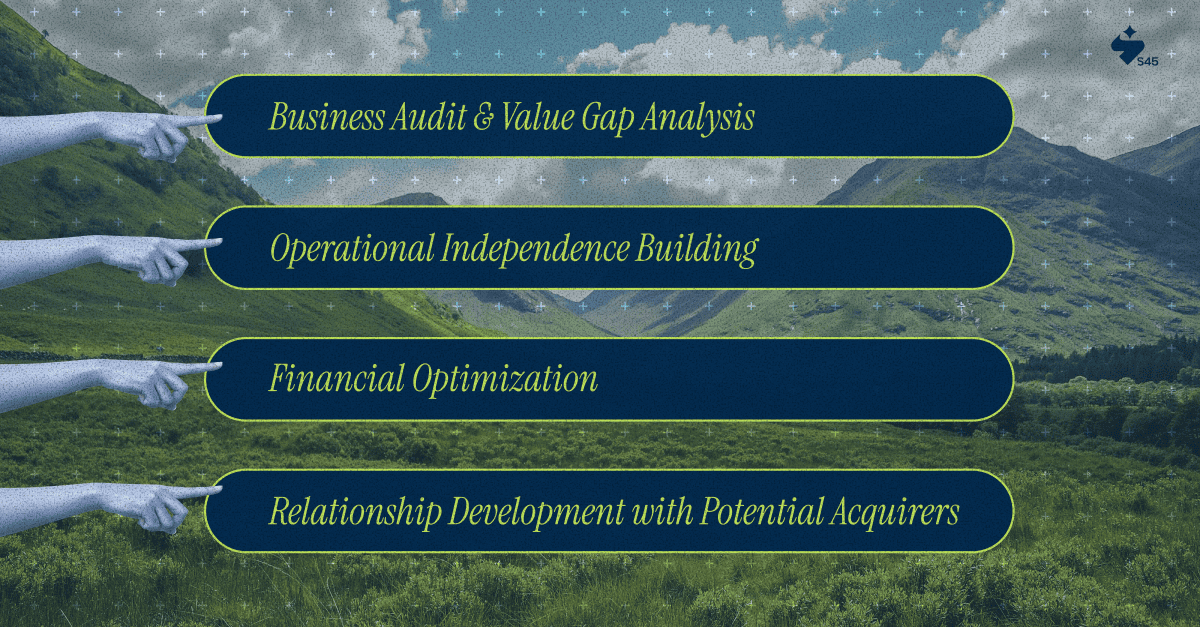
Exit readiness is a continuous process. Here’s the framework top founders follow:
Start with a clear, honest assessment:
Actionable Step: Hire a business valuation expert. Compare your business's multiple against industry standards.
Begin the transformation work:
Why It Matters: Growth capital in systems, talent, and infrastructure directly boosts exit valuation by reducing buyer risk. Premium businesses are those that can run without the founder.
Key elements that buyers look for:
Pitfall to avoid: Don’t suppress profits to minimize taxes. Buyers pay multiples on profitability; every rupee of suppressed profit could cost you 5-8x less on exit valuation.
Begin relationship-building for the future:
The Long Game: The best exits come from relationships built over time, not cold calls. When the time comes, you’ll have multiple interested buyers who already understand your value.
However, even with perfect preparation, operational, financial, and psychological, not every exit attempt succeeds. The question isn't if you'll face setbacks, but how you'll respond when you do.
Not every exit attempt succeeds. Deal financing may fall through, market conditions change, or due diligence exposes issues that halt negotiations. The founders who succeed aren’t those who avoid setbacks; they’re those who build resilience from the start.
Don’t rely on a single buyer until the deal is done and the LOI is signed. Cultivate relationships with 3-5 potential acquirers so you aren’t left without options. When your only exit option falls apart, you risk making poor concessions or even abandoning the exit entirely.
What if the exit fails? Can your business continue operating? To ensure this, you need:
Ironically, businesses built to survive failed exits are the most appealing to buyers.
Failed exits often reveal value gaps or structural weaknesses. Use these insights to strengthen your business:
Shift your mindset: Failed exits aren’t losses if they make your business stronger for the next opportunity.
You've now got the complete roadmap but the only question left is: what happens next?
Exit planning isn’t something you do when you're ready to leave—it's how you create businesses that endure.If you're an MSME founder thinking about long-term strategy or eventual transition, start now—not when it’s forced upon you.
At S45, we help MSME founders build scalable, sustainable, and sellable businesses. We provide both capital and expertise to guide you from operations to exit-readiness.
We work with founders who are:
Successful founders don’t wait until they’re burned out or forced by circumstances. They start building optionality years ahead, creating businesses that are valuable to own and attractive to acquire.
Connect with S45 to explore how we can support your exit planning and business transformation. Let’s talk about where you are, where you want to be, and how we can help bridge that gap.
Discover more insights on similar topics