April 9, 202611 min read
What Is a PPM in Private Equity? Guide to Capital Raises Done Right
By Abhishek Bhanushali
Venture Capital

Disclaimer: This content is for educational purposes only and should not be considered as financial advice. Every business situation is unique, and we recommend consulting with qualified financial advisors before making important business decisions.
You have built a company that works. Revenue is growing. The team knows the playbook. The market knows your name.
Then institutional capital enters the picture, a PE investor, a strategic acquirer, an IPO anchor, and within sixty days, the operating model you have built over a decade is under a microscope. Not because the business is broken. Because the standard has changed.
This is where most Indian founders encounter the "chaos gap" for the first time: the distance between how a well-run, founder-led business actually operates and what an institutional capital partner requires in governance, reporting, and operational accountability.
The chaos gap is not a reflection of the founder's capability. It is a structural mismatch. And every day it goes unaddressed, it is costing you valuation points, deal momentum, and negotiating leverage.
Most founders focus on the pre-investment phase, the deck, the data room, and the term sheet. Very few pay attention to what happens in the ninety days after capital is deployed.
Here is what actually happens.
The first thing a PE operations team does post-close is run a full operational audit. This is not a financial audit. It is a structural review of how the business actually runs versus how it is reported to run.
They look at:
What they find, almost universally in mid-market Indian companies, is a combination of undocumented processes, manual reporting, and operational decisions that live in the founder's head rather than in a system.
Based on the audit, the PE firm writes a value creation plan. This plan becomes the operating mandate for the hold period. It sets the KPIs the board will track, the initiatives that will be funded, and the metrics that will define exit readiness.
If you were not involved in writing this plan, because you were not prepared for the conversation, you are now executing someone else's operating model for your own company. Your management team is answerable to metrics you did not design. Your board reporting format has changed. Your CFO is now accountable to a governance framework that was not built by your finance function.
This is not a worst case. This is the standard experience for founders who did not build institutional-grade operations before the capital event.
Suggested Read: Impact Investing in Private Equity: What Indian Founders Need to Know Before You Raise
Platforms like S45, which work with Indian enterprises preparing for capital events including IPOs, apply the same operational discipline framework that PE firms use internally. The language differs, capital markets readiness versus value creation, but the underlying standard is identical.
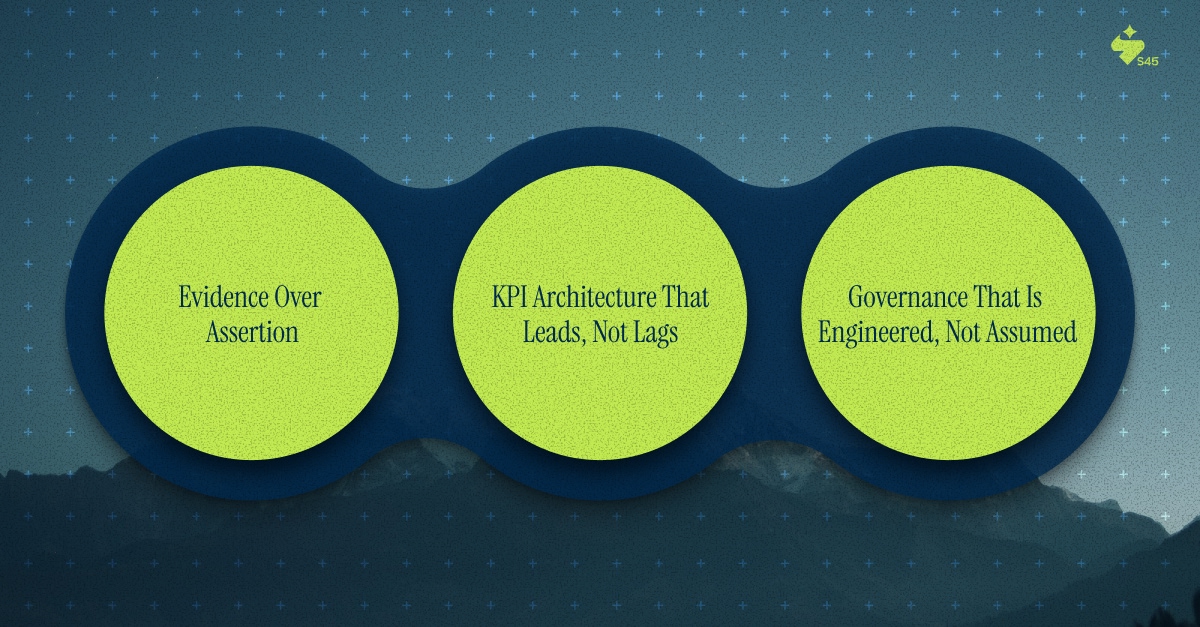
Here is what that standard looks like in practice.
Every operational claim must be traceable. Every performance improvement must be measurable and baselined. Every strategic initiative must have a defined owner, a milestone structure, and a review cadence.
This matters because institutional investors, whether PE firms or public-market anchor investors, do not make decisions based on narratives. They make decisions on the basis of evidence. If the evidence is neither structured nor accessible, the narrative collapses during the first round of diligence.
Most founder-led companies track lagging indicators: revenue, EBITDA, and headcount. PE firms track leading indicators: pipeline conversion rates, capacity utilization, customer acquisition costs, cohort churn, and gross margin by product line.
The difference is critical. Lagging indicators tell you where the business has been. Leading indicators tell you where it is going. Institutional capital bases valuation on where the business is going.
Building a KPI architecture that tracks leading indicators requires deliberate design. It does not emerge organically from monthly MIS reports.
PE-backed companies have board reporting structures in which the information the operating team tracks is identical to what the board reviews. Management incentives are aligned with the same metrics. There is no translation layer between what the business measures and what the investors see.
In most founder-led mid-market companies, these layers exist. The internal MIS says one thing. The board deck says another. The investor update says a third. Each translation introduces risks: misrepresentation, misalignment, and delayed recognition when something is going wrong.
The pattern across Indian mid-market companies approaching capital events is consistent: founders who attempt to build institutional-grade operations under the pressure of an active deal process always pay more, in time, in fees, in valuation haircuts, and in control.
When a PE investor or SEBI-led process surfaces operational gaps under diligence, the consequences are predictable:
None of this is inevitable. It is the consequence of not building the operational standard before the capital conversation begins.
Founders who arrive at a capital event with institutional-grade operations in place experience the process differently. Diligence moves faster because the data is structured and accessible. Valuation conversations are anchored in evidence rather than negotiated on narrative. The founder retains the position of the informed party in the room, not the reactive one.
This is not a minor operational preference. It is the difference between a deal that closes in six months and one that closes in nine, and between the deal you designed and the deal that gets imposed on you.
Also Read: Private Equity Value Creation Strategies: Building IPO-Ready Operations from Day One
The work required to close the chaos gap is not a transformation project. It is an infrastructure project. It requires building the systems, reporting structures, and governance frameworks that institutional capital will demand, but building them on the founder's timeline, not the investor's.
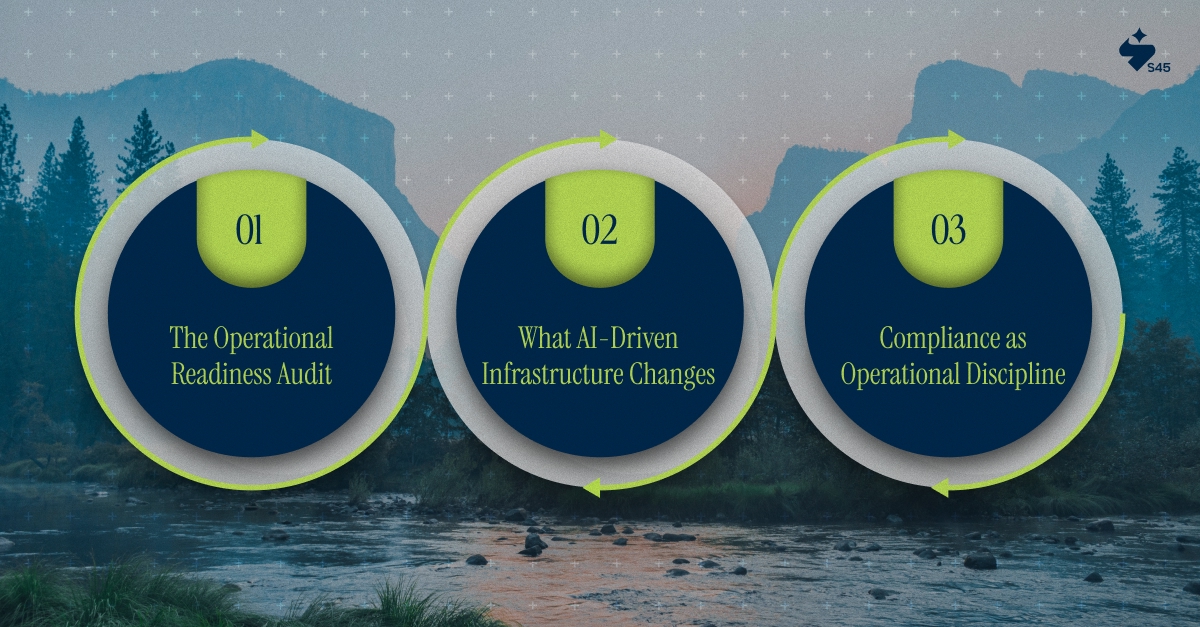
Before any capital event, founders need to know exactly where their operational infrastructure stands against the institutional standard. This means an honest audit of:
The output of this audit is not a scorecard. It is a prioritized list of gaps an institutional investor will identify, along with a timeline for closing them before they become negotiating liabilities.
The timeline for building institutional-grade operational infrastructure has been significantly compressed. AI-driven tools now automate large portions of the reporting, benchmarking, and disclosure work that previously required months of manual effort and large advisory teams.
For companies approaching capital markets transactions specifically, AI can:
What AI does not replace is the institutional judgment required to interpret what the data means and decide what to prioritize. That combination, AI infrastructure paired with banker-grade operational judgment, is what separates execution that moves quickly from execution that moves quickly in the wrong direction.
Indian founders frequently treat SEBI ICDR, LODR, and sector-specific compliance as a process that runs parallel to operations. It does not. Regulatory compliance is the output of how a company is operationally structured. Companies that treat compliance as a parallel track consistently find, under institutional scrutiny, that compliance output and operational reality are misaligned.
The institutional standard treats regulation as structure. SEBI's disclosure requirements are not a burden to be managed. They are a framework that forces operational clarity, clarity on related-party transactions, on contingent liabilities, and on management accountability structures. Founders who internalize this framework early are not doing more work. They are building a more defensible business.
The PE operational playbook is not a secret. Every top-tier fund applies it to every company they acquire. The question for Indian founders is not whether this standard exists. The question is whether you meet it before an institutional capital event forces the conversation.
Closing the chaos gap is not about becoming a PE firm. It is about building a business that can withstand the scrutiny of one, the public markets, anchor investors, and SEBI. The operational infrastructure required to pass that scrutiny is also the infrastructure that makes the business more efficient, more valuable, and more defensible at any stage.
Before you enter a capital conversation, know where your operations actually stand.
S45 works with Indian enterprises to diagnose exactly that, and to build the institutional-grade operational and capital markets infrastructure that serious capital requires. Connect with S45 before the clock on your capital event starts running.
Discover more insights on similar topics