April 10, 202611 min read
Angel vs. Seed Funding: What Every Indian Founder Must Know Before Raising Capital
By Abhishek Bhanushali
Startup Funding
Key Takeaways
Disclaimer: This content is for educational purposes only and should not be considered as financial advice. Every business situation is unique, and we recommend consulting with qualified financial advisors before making important business decisions.
Indian MSME founders often begin their journey with one big question: Should I fund my business myself or look for external capital? For many of you building legacy-driven, innovation-minded businesses, the appeal of self-funding is strong. No investors questioning your decisions. No dilution. Complete freedom to build the business your way.
But here is the other side. Personal capital is limited, growth can feel slow, and the risk sits squarely on your shoulders. With over 6.3 crore MSMEs in India, most begin with self-funding, yet many struggle when cash flow tightens or scale demands increase.
This guide walks you through what self-funding really means, its benefits, the risks involved, and when this path makes sense for you as a founder.
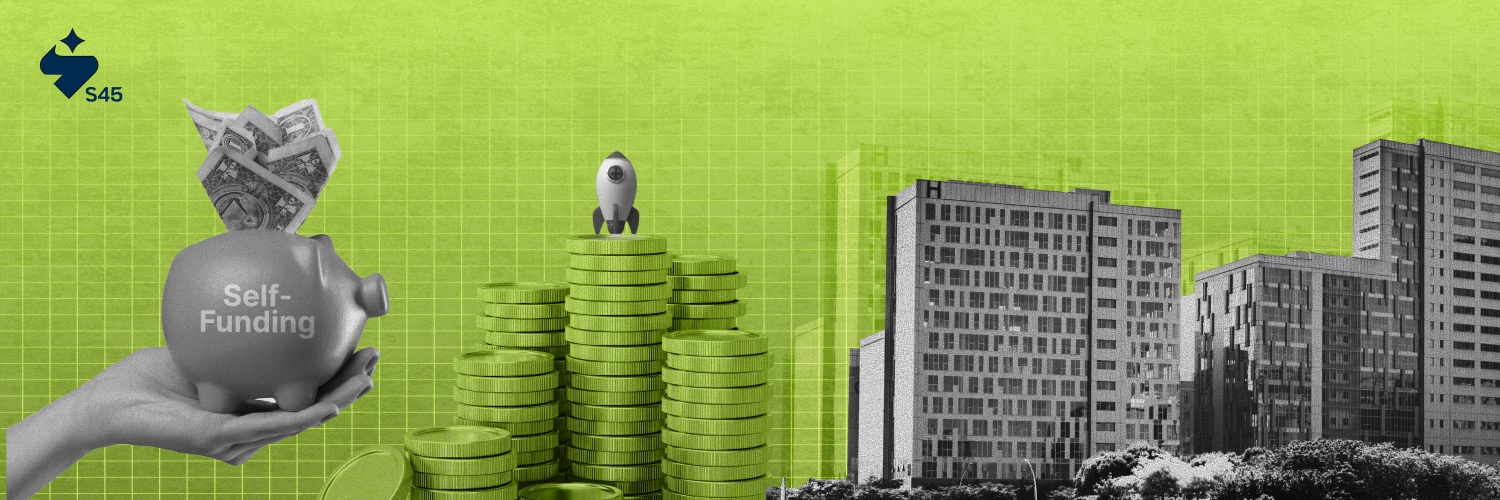
Self-funding simply means starting and growing your business using your personal financial resources instead of raising equity or debt from external investors. Many Indian founders call it bootstrapping. The idea is straightforward. You launch lean, reinvest early profits back into the business, and scale gradually with discipline.
Common forms of self-funding in India:
How is it different from traditional funding?
If you are someone who values control and wants to build patiently, self-funding can be a solid start. Yet as growth demands increase, a partner who walks beside you can make a difference. S45 helps founders retain ownership while still accessing capital and expert guidance.
Self-funding often becomes the first milestone in a founder’s journey. You start small, make decisions fast, and build based on customer needs rather than investor expectations. For many Indian MSMEs, this approach creates a strong foundation before thinking about outside capital.
When you self-fund, 100 percent equity stays with you. No board approvals. No dilution. You decide how fast to grow, what to build next, and when to pivot. This freedom is powerful for founders who think long term. Zoho, a global SaaS leader from India, operated this way and built patiently over decades. Even when partnering for growth later, you still stay in the driver's seat.
Every rupee matters, which creates sharp business thinking. Bootstrapped startups have 21% higher profitability than VC-backed startups. You hire only what is essential, watch cash flow closely, and avoid spending on vanity activities. This habit builds strong financial judgment and helps you run an efficient operation that can survive market swings.
When funding does not come from investors, it must come from customers. This forces real product validation. You solve real problems, build based on feedback, and grow through genuine demand instead of hype. Strong customer loyalty becomes your fuel.
You can act fast. No waiting for approvals. If a new opportunity arises, you can test it next week. Growth happens at your pace, aligned with relationships and trust, which matter deeply in Indian markets.
Traction first, funding later, often leads to better terms. Once the business proves itself, you hold negotiation power. Many founders bootstrap initially, then raise funds for scale at a much higher valuation. Funding becomes a choice, not a survival need.
Self-funded businesses grow slowly but steadily. They create assets that can be passed on to future generations. Profits stay within the business and the community. This kind of growth aligns with founders who value longevity over shortcuts.
If you ever reach a stage where growth needs capital or specialized direction, you do not need to give up ownership to move forward. S45 works with founder-led businesses by offering capital plus operational support without overshadowing the founder’s vision.
In short, self-funding gives you control, clarity, and sustainable growth. But it is not without tradeoffs, which we will explore next.

Self-funding is rewarding, but it demands patience and resilience. Many MSME founders start strong, only to feel the pinch when funds get tight or competition accelerates. Knowing the risks early helps you prepare rather than react later.
With personal funds, growth follows available cash. Marketing budgets are tight. Hiring is selective. Expansion takes time. You might spot a market opportunity but lack the capital to capture it quickly. Capital-heavy models like manufacturing or infrastructure feel this more strongly. Self-funded growth usually compounds over years, not months, so expectations must be realistic.
Your money is on the line, be it savings, gold, or family contributions. There is no external safety cushion if revenue dips. Lifestyle adjustments become real decisions. Many founders feel pressure when family members ask about progress, especially in joint family setups. The key is simple. Never put in money you cannot afford to lose. Create buffers, not blind bets.
You wear every hat. Sales in the morning. Accounting in the afternoon. Strategy at night. Decisions carry weight because every rupee is personal. This can lead to fatigue and isolation when there is no experienced advisor to guide you. Momentum slows if the founder burns out early.
Well-funded competitors move fast. They scale marketing, hire aggressively, and build product at speed. Brand recall becomes tough to match. You might be better, but visibility wins markets. Talent also prefers growth opportunities and pay security that funded companies can offer.
Without capital, expansion needs careful timing. Inventory slows cash flow. Tech upgrades get delayed. You might have demand, but not the resources to serve it. At some point, self-funding shifts from a strategy to a constraint.
Investors bring more than money. They bring knowledge, playbooks, and networks. Without this, blind spots remain, decisions take longer, and market access becomes harder.
However, these risks do not mean self-funding is wrong. They mean you need clarity and a plan.
Self-funding works beautifully for some founders and feels limiting for others. The right choice depends on your business model, financial readiness, and growth vision. Instead of guessing, evaluate your position with clarity.
Consider self-funding if:
Consider external funding if:
A hybrid route also works well for many MSMEs:
If you feel ready to self-fund, the next step is learning how to use money wisely. Let us move to practical strategies that help founders self-fund without burning out or running dry.

If you have chosen the self-funding route, the goal is simple: stretch every rupee, generate revenue early, and build momentum without overextending. Many founders start with enthusiasm, but struggle when expenses grow faster than income. A structured approach prevents that struggle.
Good cash visibility means fewer surprises and more control over decisions.
Lean beginnings lead to agile growth.
Money from customers beats money from investors.
This reduces personal capital pressure.
Networks save both time and mistakes.
These steps make self-funding sustainable instead of stressful. You now understand how to fund your journey wisely. But nothing inspires confidence like real success.
Many founders want control but also need guidance, capital, and a trusted growth partner. Self-funding keeps ownership intact but can feel lonely without expert direction or network access. This is where S45 steps in, not as a traditional investor, but as a partner in your climb.
This is what makes the S45 different:
With S45, your vision stays in the driver's seat. We walk beside you, helping strengthen systems, streamline operations, and scale with confidence. You build legacy, not just revenue.
Ready to explore how we can support your self-funded journey while preserving your vision? Connect with our team to discuss sustainable growth pathways for your MSME
Discover more insights on similar topics