
March 26, 20268 min read
Asset Management vs. Investment Banking: Why the Distinction Dictates Your Exit
By Aman Singh
Investopedia

Disclaimer: This content is for educational purposes only and should not be considered as financial advice. Every business situation is unique, and we recommend consulting with qualified financial advisors before making important business decisions.
If you are a promoter, CFO, or board member of a high-growth Indian enterprise, you have probably already heard the phrase "institutional readiness." What most advisors fail to tell you is that institutional readiness is not just about your financials or your growth story. It starts with your capital structure and the type of investment instruments woven into it.
Indian capital markets in 2025 and 2026 are not the same as they were a decade ago. The lines between traditional and alternative investments have blurred, SEBI's regulatory architecture has matured significantly, and institutional investors now conduct forensic capital stack reviews before committing to an IPO mandate. When your investor mix includes instruments that they cannot easily categorize, verify, or disclose, it slows everything down.
The traditional vs alternative investments debate is not academic. It is operational. And if you are preparing your enterprise for a Main Board or SME Exchange listing, understanding this distinction with precision is not optional; it is a prerequisite.
Before anything else, the terminology needs to be grounded in the Indian regulatory context, not the global textbook version.
Traditional investments are publicly traded, highly regulated, and broadly accessible instruments. In the Indian context, these include:
These instruments share three defining characteristics: high liquidity, robust regulatory oversight, and transparent pricing. Investors can enter and exit with minimal friction. Disclosures are standardized. Pricing is market-determined and verifiable.
In the Indian regulatory framework, alternative investments are predominantly structured as SEBI-regulated Alternative Investment Funds (AIFs), which operate under the SEBI (Alternative Investment Funds) Regulations, 2012. These include:
The SEBI AIF master circular establishes a compliance-intensive framework that is materially different from what governs traditional instruments. Minimum investment thresholds, lock-in structures, accredited investor requirements, and illiquidity profiles make these instruments a distinct category, both operationally and in terms of disclosure.
This is precisely why, when you are preparing for an IPO, the presence of AIFs, PE funds, or complex debt instruments in your capital table demands a different level of disclosure rigour than a simple equity shareholding structure.
Suggested Read: Category II Alternative Investment Funds: Overview and Benefits
The traditional vs alternative investments question is not just about where money sits. It is about what institutional investors and SEBI expect to see disclosed, verified, and explained when your company files its Draft Red Herring Prospectus (DRHP).
S45, an AI-native investment bank built for Indian capital markets, treats the capital stack analysis as one of the earliest stages of IPO readiness, not an afterthought. When a company carries alternative capital, PE stakes, AIF commitments, convertible instruments, every term sheet, every side letter, every governance right attached to that capital has to be mapped, disclosed, and presented with precision.
This is where enterprises lose months before SEBI even reviews the substance of their business.
Consider a promoter-led business that raised growth capital from a Category II AIF three years ago. At the time, the focus was on the capital, not the fine print. Now, as the company approaches IPO:
None of this is insurmountable. But none of it can be managed in a hurry. The enterprises that handle it cleanly are the ones that understood early, at the capital-raising stage itself, how their alternative investment instruments would be treated in a public market context.
When comparing traditional and alternative investments for capital markets readiness, three structural differences matter most.
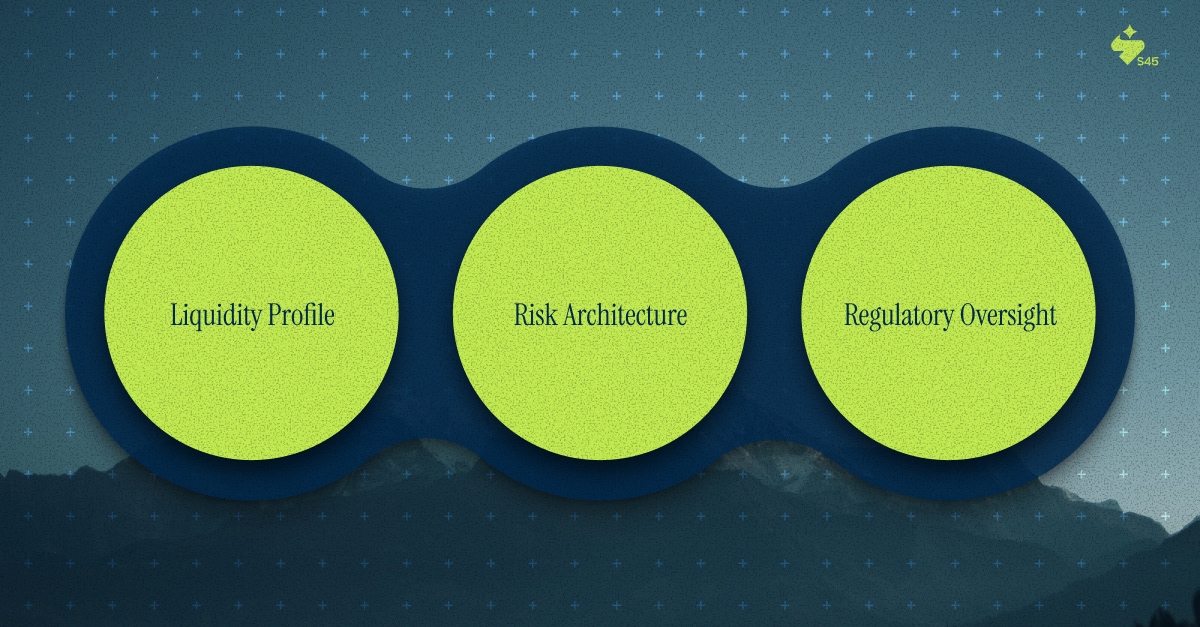
Traditional instruments are liquid by design. An equity mutual fund can be redeemed within 2 to 3 business days. A listed bond can be sold on the secondary market. This liquidity is built into the regulatory architecture.
Alternative investments are structurally illiquid. A Category II AIF typically has a fund life of seven to ten years, with limited redemption windows. Private equity stakes cannot be exited without a secondary transaction or a liquidity event, such as an IPO or a strategic sale.
For a company preparing to list, this illiquidity creates two specific problems:
Traditional investments operate within well-defined risk parameters. A mutual fund's risk is disclosed, benchmarked, and monitored daily. Bond ratings are published and updated. The risk is transparent.
Alternative investments involve risk that is disclosed once, at entry, through a Private Placement Memorandum (PPM). After that, valuations are conducted periodically (quarterly in most cases), methodologies vary, and independent verification is limited.
For a company whose balance sheet includes alternative instruments on either side, as issuer or investor, the risk disclosure in the DRHP must go beyond standard language. SEBI reviewers are increasingly focused on valuation governance. SEBI Chairman Tuhin Kanta Pandey noted at the IVCA Conclave 2026 that weak or opaque valuations in alternative assets can erode investor confidence and distort price discovery when companies move towards public markets.
The regulatory gap between traditional and alternative investments in India has narrowed significantly in recent years, but it has not closed.
Traditional instruments are regulated by SEBI under frameworks that require daily disclosure, real-time pricing, and standardized documentation. The compliance burden is continuous and automated.
Alternative instruments, even those registered under SEBI's AIF framework, operate under a lighter-touch disclosure regime. As of February 2026, there are 1,768 registered AIFs in India with total commitments of Rs. 15.7 trillion. SEBI has been steadily tightening disclosure and governance standards, including the mandatory appointment of a custodian, the issuance of dematerialized units, and pari-passu investor rights, but the framework remains less prescriptive than public market regulation.
This regulatory asymmetry is not a problem in isolation. It becomes a problem at the intersection of private and public markets, which is exactly where an IPO sits.
Also read: Corporate Banking vs Investment Banking: Key Differences
When your company files a DRHP, SEBI does not just look at your revenue, your promoter background, or your financial statements. It looks at your entire capital structure, who holds what, under what terms, and whether every instrument has been properly categorized, disclosed, and resolved.
Companies that have raised capital through alternative instruments without documenting governance terms clearly are the ones that generate extended SEBI comment cycles. Common triggers include:
Each of these triggers a comment. Each comment takes weeks to respond to. And each response reopens the review. This is not a regulatory dysfunction; it is the system working as designed. SEBI's job is to protect public investors. When private capital structures are opaque, SEBI asks more questions. The answer is not to fight the process; it is to have resolved these structural issues before the DRHP is filed.
This is the institutional clarity that separates a 45-day DRHP process from a six-month one.
Not all alternative investments create problems at IPO time. Some are actually a credibility signal; a company backed by a reputable Category II AIF, with governance rights properly documented and disclosed, can present an institutional pedigree that supports its IPO narrative.
The question is not whether alternative capital is good or bad. The question is whether it has been structured, documented, and managed in a way that survives public market scrutiny.
When an enterprise has managed its alternative investments with capital markets discipline:
Conversely, enterprises that approach IPO prep without having cleaned up their alternative capital structures tend to face:
S45's IPO readiness process begins with a full capital stack review, mapping every instrument, every governance right, and every disclosure obligation before a single page of the DRHP is drafted. That evidence-linked approach is what compresses timelines without creating compliance exposure.
Most promoters treat regulatory compliance as something that kicks in after the IPO mandate is signed. That is the wrong sequence. The two frameworks governing your public market transition, SEBI ICDR and SEBI LODR, do not permit retroactive cleanup. They require that your capital structure, governance rights, and disclosure obligations are already in order before the process begins. Understanding where these frameworks draw hard lines is what separates a clean filing from a comment-heavy one.
The SEBI (Issue of Capital and Disclosure Requirements) Regulations, 2018, set the disclosure standard for IPOs. Every instrument in your capital structure must be categorized, priced, and disclosed under this framework. The ICDR does not have a provision for "we raised this under AIF terms, and we will figure out the disclosure later." Every right, every instrument, every obligation must be mapped.
The SEBI (Listing Obligations and Disclosure Requirements) Regulations, 2015, then govern the company once listed. If your alternative investment instruments create ongoing governance obligations, board representation rights, veto rights, or anti-dilution provisions, these must be resolved before listing, because they cannot coexist with LODR's framework for listed company governance.
SEBI has been tightening AIF regulation consistently. Key developments that affect companies with AIF investors on their cap table:
These changes have made AIF governance more transparent, which is positive for the ecosystem, but they have also raised the bar for documentation for companies that carry AIF capital into a public market process.
The traditional vs alternative investments distinction is not a theoretical exercise. In the context of Indian capital markets, it is a practical, operational question with direct consequences for IPO timelines, SEBI review cycles, and institutional investor confidence.
Companies that have raised alternative capital, PE, AIF, structured instruments, and managed it with public market discipline will find the IPO process faster, cleaner, and more defensible. Companies that treated their alternative capital as a private matter to be sorted out later will spend those months generating SEBI comments, renegotiating investor agreements, and explaining governance complexities to institutional book-runners.
The difference is not intelligence or intent. It is a process. Capital markets readiness is built in the years before the DRHP, not in the weeks after the mandate.
If you are a promoter or CFO navigating the intersection of your alternative capital structure and a potential public market transaction, the first step is a clear-eyed assessment of where you actually stand, not where you believe you stand.
Connect with S45 for a structured IPO Readiness Scan that maps your capital structure against SEBI's disclosure framework, identifies conflicts before they become comment cycles, and gives you the institutional clarity to move forward with confidence.
Discover more insights on similar topics