
April 10, 202611 min read
Angel vs. Seed Funding: What Every Indian Founder Must Know Before Raising Capital
By Abhishek Bhanushali
Startup Funding

Disclaimer: The information provided in this article is for general educational purposes only and should not be considered financial advice.
Have you ever felt like your business is ready to grow, your customers are interested, your operations are stable, your team is capable, yet the money you need just doesn't line up? If yes, you’re in the same place as millions of ambitious SME owners who face a challenge that has nothing to do with ideas or efforts and everything to do with funding.
Here’s a powerful reality check: Over the next decade, an estimated 1.2 billion young people will reach working age, but only about 420 million jobs are expected to be created. That means more entrepreneurs will emerge, more small businesses will be born, and more demand for funds will rise, while access to capital continues tightening.
So even if your business has demand, a clear roadmap, and steady operations, you might still find yourself struggling with limited capital. This silent barrier has a name: the funding gap.
Understanding what the funding gap is and why it happens can help you spot early warning signs, plan better, and protect your business from stalled growth. Let’s get started.
A funding gap occurs when a business needs more capital to operate or grow than what it currently has access to. In simple terms, it’s the difference between the money required and the money available, whether through revenue, credit, or investment.
What makes this gap especially challenging for SMEs is that it often appears even when the business is performing well. You might have rising demand, healthy orders, or new growth opportunities, but the capital needed to execute those plans just doesn’t show up at the right time.
To put things into perspective, bank credit to micro and small enterprises in April 2024 grew by 15.6%. While this looks promising, the demand for funds is growing much faster than the supply. This widening mismatch is exactly what creates the funding gap for thousands of SMEs every year.
A funding gap can show up when:
Understanding why funding gaps occur is only the first step; it's equally important to recognise the different forms these gaps take and how each one affects daily operations.
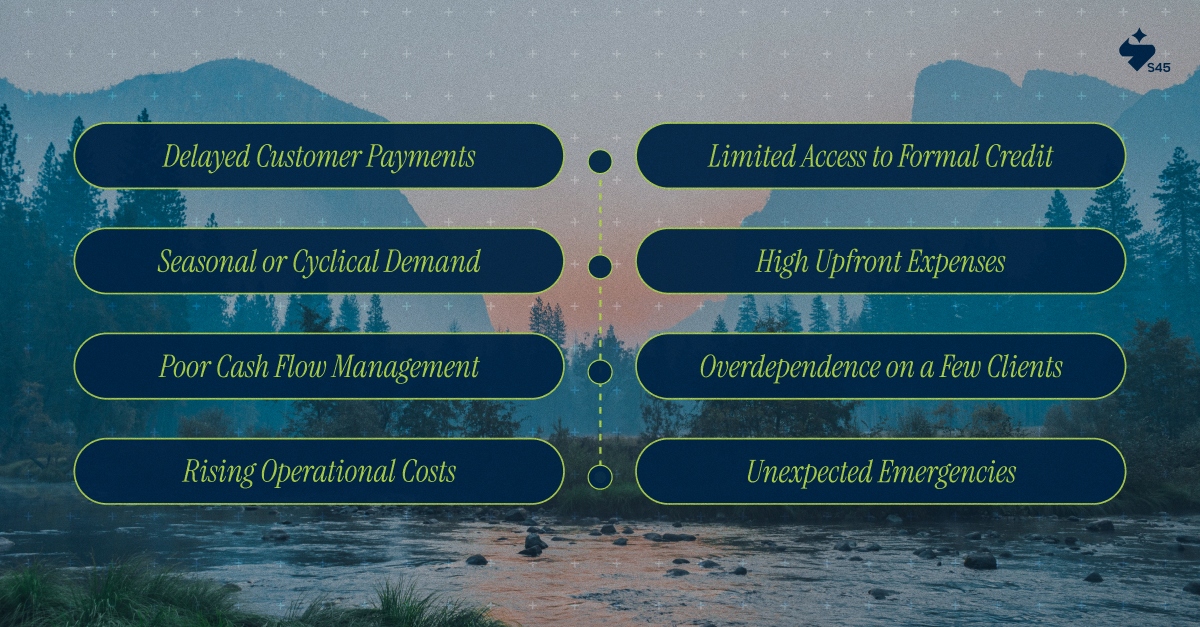
Funding gaps rarely appear overnight; they usually build up over time due to internal challenges, market realities, or financial misalignment. For many SMEs, even healthy revenue streams can feel insufficient when cash cycles, credit terms, and operational demands don’t match. Understanding these causes is the first step toward preventing long-term financial stress.
Many SMEs benefit from expert support to evaluate their cash cycles and credit readiness more accurately, something platforms like S45 help simplify for growing businesses.
When a business doesn't have consistent access to funds at the right time, the impact goes far beyond delayed payments. Funding gaps slowly influence how an SME operates, grows, and competes in the market. Even profitable companies struggle when liquidity is unpredictable, because stability, not just revenue, drives sustainable growth.
Here’s how funding gaps hold SMEs back:
To understand how SMEs can prevent these challenges, it's important first to explore the root causes behind funding gaps and why they appear in growing businesses.
Not all funding shortages look the same. Depending on the industry, business model, and growth stage, SMEs experience different kinds of financial shortfalls that disrupt operations in unique ways. Understanding these variations helps SMEs identify problems early and choose the right financing tools.
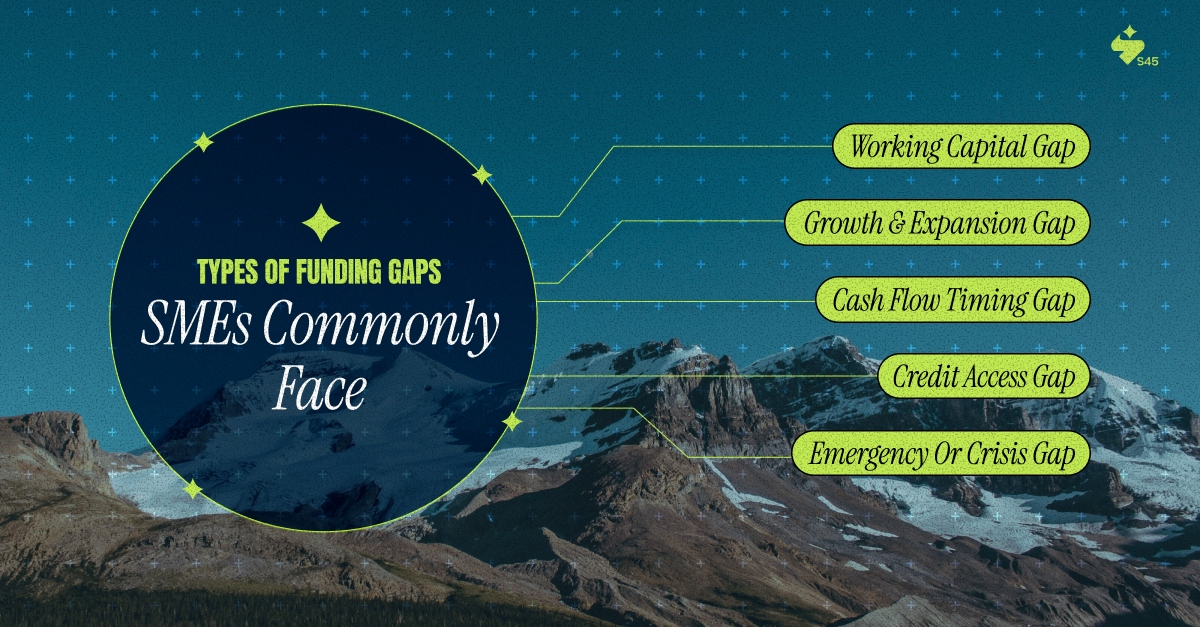
This occurs when day-to-day operational expenses exceed available short-term funds.
Common reasons include:
Impact: Difficulty managing salaries, inventory purchases, and utility expenses on time.
A financing gap arises when an SME has opportunities to grow but lacks the capital to pursue them.
Examples include:
Impact: Missed opportunities and delayed expansion strategies.
A timing mismatch happens when payments from customers come later than payments due to suppliers.
Usually caused by:
Impact: SMEs struggle to maintain stability even when profitability is strong.
This occurs when SMEs cannot qualify for formal credit due to documentation issues, low credit scores, or insufficient collateral.
Common barriers:
Impact: Reliance on expensive informal lending sources and higher borrowing costs.
Unexpected events can create sudden financing shortfalls.
Triggers include:
Impact: Increased operational pressure and potential halts in production.
When SMEs maintain steady liquidity, they can invest in expansion, upgrade technology, hire better talent, and respond quickly to market opportunities.
A well-managed cash cycle also strengthens creditworthiness, making it easier to secure future funding at better terms. Simply put, bridging funding gaps builds financial stability today and creates room for sustainable, long-term growth tomorrow.
Funding gaps don’t always show up as major financial crises; most start as subtle signs in your cash flow, operations, or customer payment behaviour. The earlier an SME identifies these signals, the easier it becomes to take corrective action and prevent long-term financial strain. A structured approach helps business owners understand whether the issue lies in revenue timing, rising expenses, or a lack of external credit support.
Also Read: Exit Strategy Guide for Investors: Definition and Importance
While these strategies can help strengthen your cash flow, navigating funding gaps still requires clarity, experience, and the right financial guidance, especially when decisions affect long-term stability. This is where having a trusted strategic partner like S45 can make all the difference.
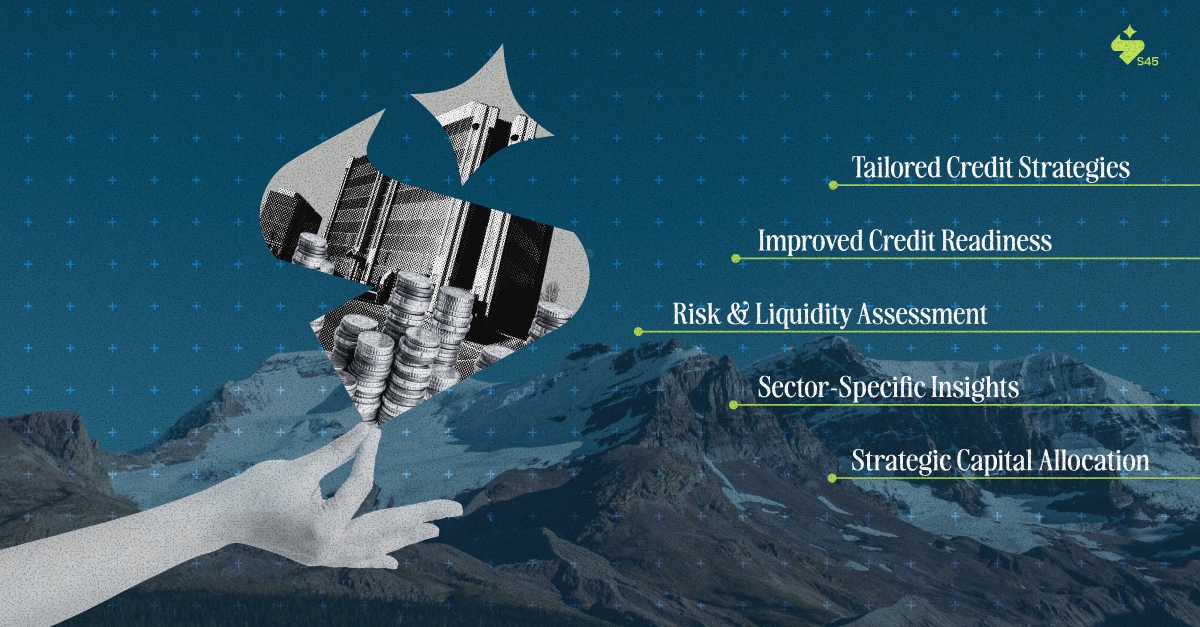
The S45 Club supports high-performing Indian SMEs by offering deep financial expertise, strategic guidance, and access to reliable credit funding pathways. Instead of navigating complex financing options alone, SMEs gain a structured approach to borrowing, repayment planning, and long-term capital allocation.
S45 walks beside you at every stage of your credit journey, helping you avoid borrowing mistakes and make decisions backed by data, insight, and long-term strategy.
Funding gaps are a reality for many SMEs, but they don’t have to slow down growth. With the right financial understanding, clear cash flow planning, smart credit management, and early detection of liquidity issues, businesses can stay resilient even in uncertain conditions. The key is not just securing funds, but doing it in a way that supports long-term stability and expansion.
When SMEs take a structured approach to borrowing and capital allocation, they gain the clarity and confidence needed to pursue new opportunities, strengthen operations, and grow sustainably.
If you're ready to make stronger, more informed credit decisions and build a financially secure future for your business, connect with S45 today. Let’s build lasting value together.
Discover more insights on similar topics